19 Steps To A Minimalist Kitchen You’ll Love
Ever felt overwhelmed by kitchen clutter? A minimalist kitchen isn’t just about looking good – it’s about creating a calm, functional space that makes cooking enjoyable again.
By simplifying your kitchen environment, you’ll save time cleaning, reduce stress, and actually use what you have.
Ready to transform your chaotic cooking space into a peaceful culinary haven?
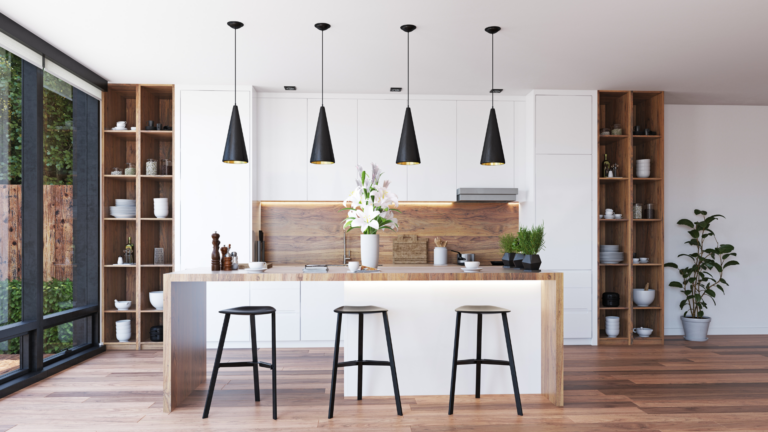
1. Declutter Your Countertops
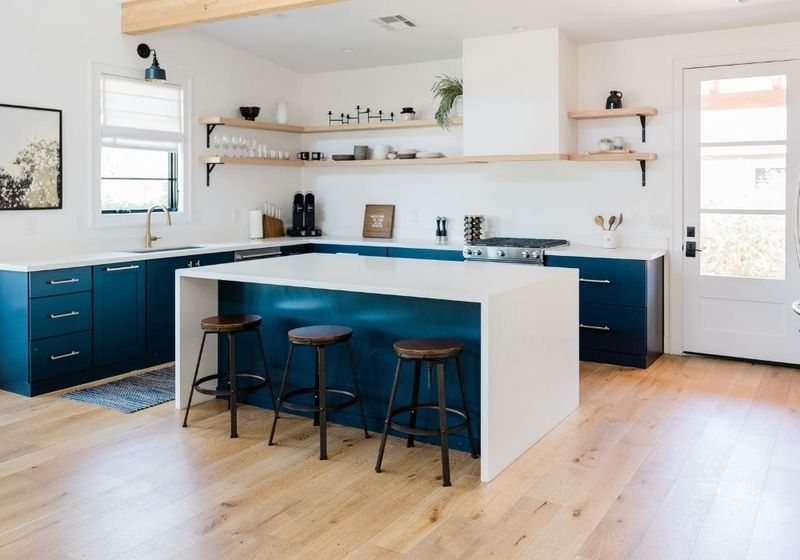
Walking into a kitchen with clear countertops instantly creates a sense of calm. Take a hard look at what’s currently sitting out – do you use that mixer daily, or could it live in a cabinet?
Only keep items you use at least every other day visible. The coffee maker might stay, but the juicer you pull out once a month should find a home inside a cupboard.
2. Eliminate Duplicate Tools
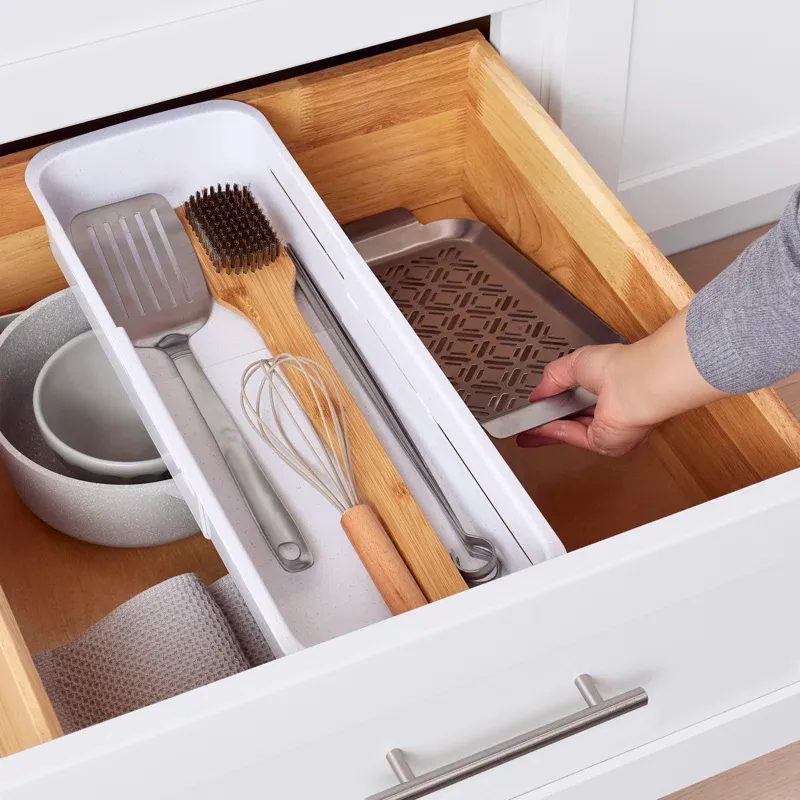
Most kitchens hide a surprising secret: multiple versions of the same tool! When was the last time you needed four spatulas simultaneously?
Keep only your favorite version of each utensil. Quality trumps quantity every time, and having fewer items makes organization significantly easier. Those three extra can openers and duplicate measuring cups are just stealing valuable drawer space.
3. Create Hidden Storage Solutions
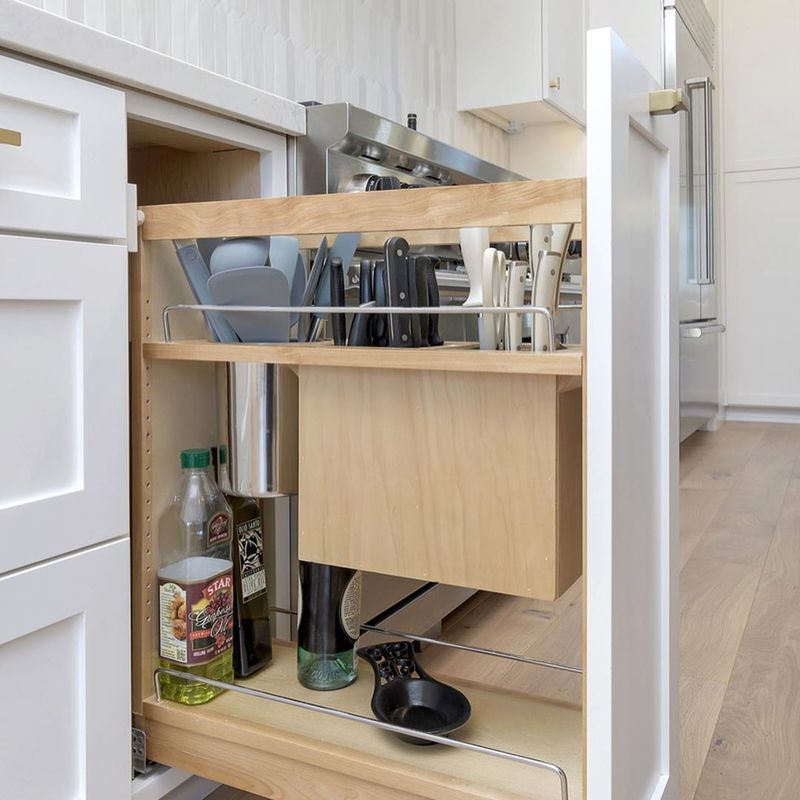
Behind those cabinet doors lies untapped potential! Vertical dividers transform baking sheet storage from chaotic to orderly in seconds.
Consider installing pull-out drawers in deep cabinets to eliminate the frustration of reaching for items in the back. Door-mounted organizers work wonders for spices and cleaning supplies, keeping them accessible yet hidden from view.
4. Embrace Neutral Color Palette
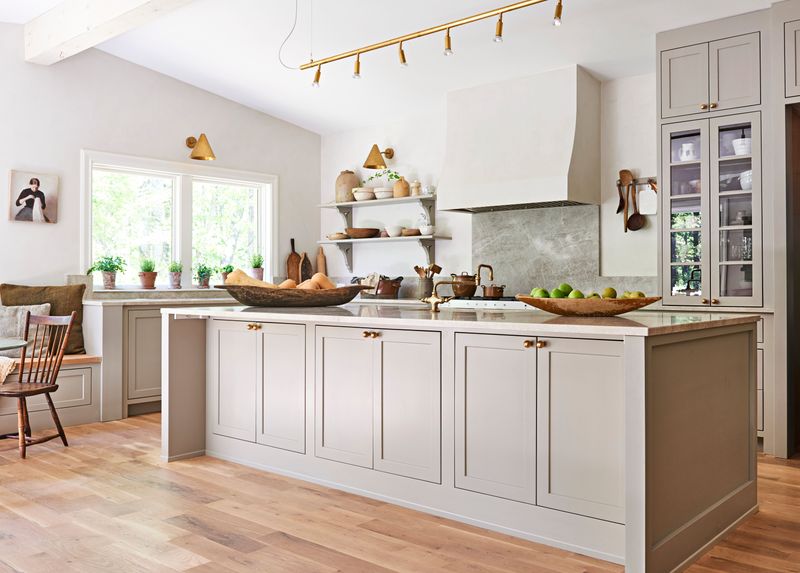
Color has profound psychological effects on our mood and perception of space. Whites, beiges, and light grays make kitchens feel more spacious and serene.
Limiting your kitchen’s palette to 2-3 complementary neutral tones creates visual harmony. When everything coordinates, even open shelving looks intentional rather than cluttered. Your cooking space will instantly feel more cohesive and peaceful.
5. Invest in Quality Over Quantity
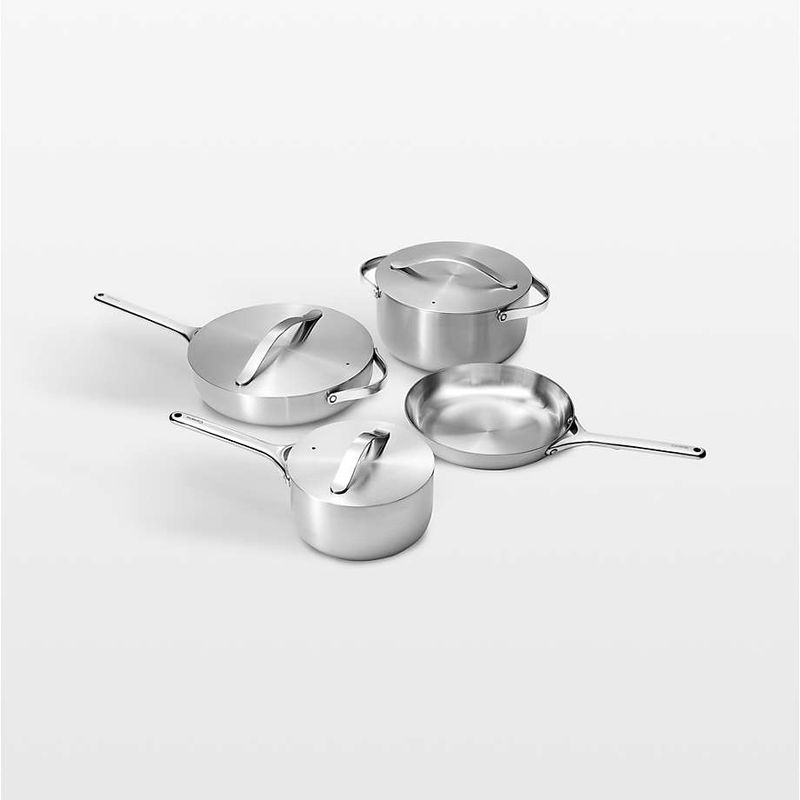
A single excellent chef’s knife can replace that block of mediocre blades gathering dust. High-quality cookware not only performs better but typically lasts decades longer than cheap alternatives.
Focus your budget on fewer, better items that bring joy when used. The initial investment might be higher, but you’ll save money long-term by not constantly replacing worn-out, inferior products.
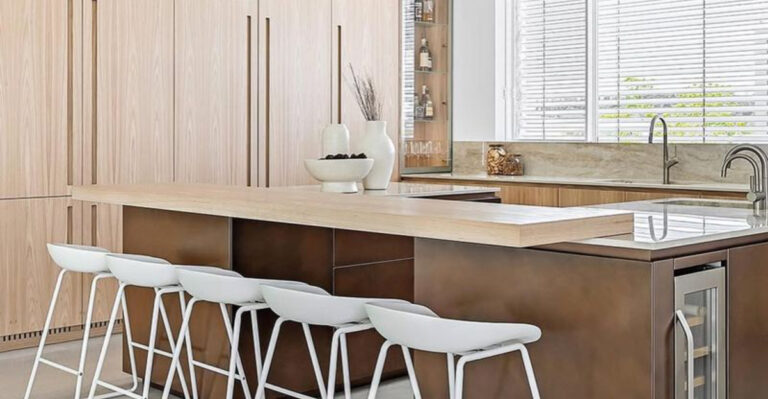
6. Install Handleless Cabinets

Hardware-free cabinets create sleek, uninterrupted lines that epitomize minimalist design. Without handles jutting out, the entire kitchen feels more streamlined and less visually busy.
Modern push-to-open mechanisms make these cabinets just as functional as traditional ones. If replacing cabinets isn’t in your budget, simply removing existing hardware and installing touch-latch systems can achieve a similar effect.
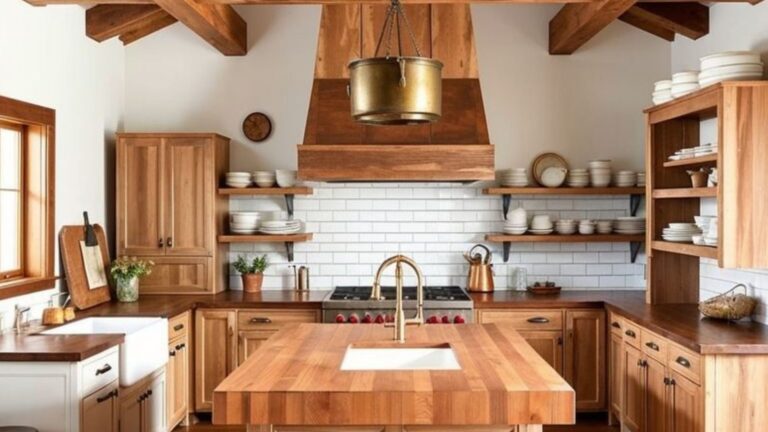
7. Keep Open Shelving Disciplined
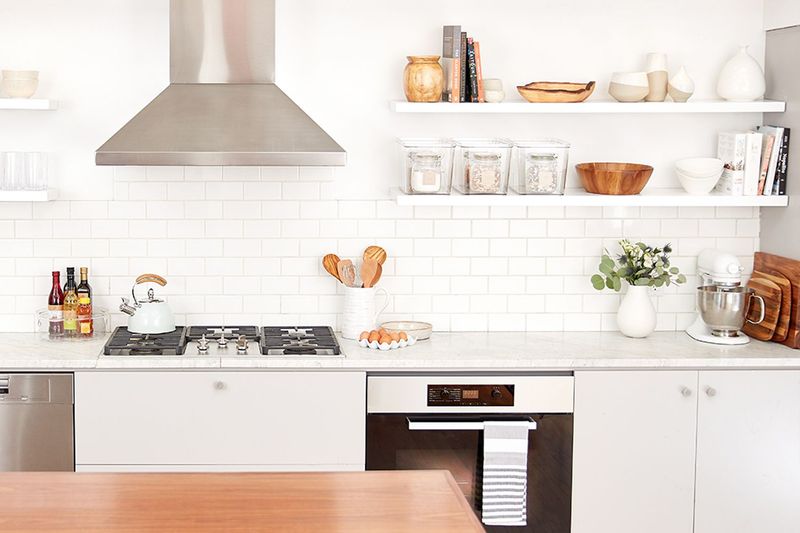
Open shelving requires commitment to avoid looking messy. Successful minimalist open shelves display only your most beautiful items in intentional arrangements.
Group similar items by color or function, and leave plenty of negative space. Remember the rule of three – items look best when displayed in odd-numbered groups. Maintain this discipline or consider closed storage if you struggle with the visual organization.
8. Limit Decorative Items
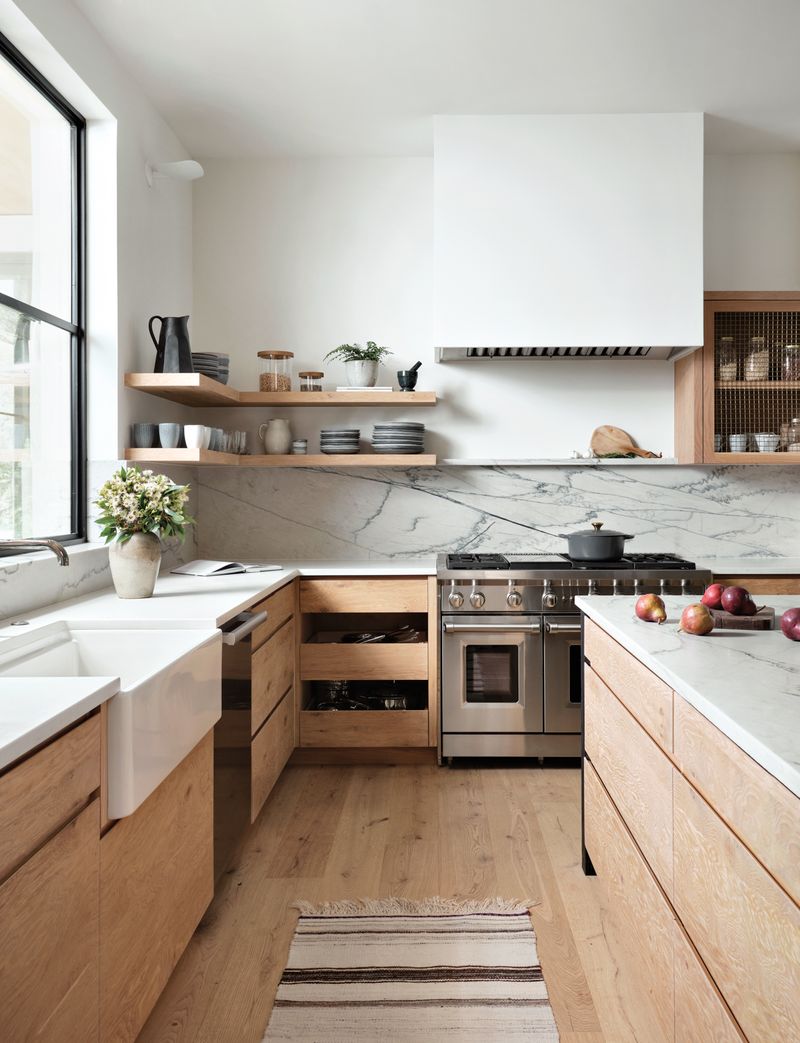
In a truly minimalist kitchen, even decorations follow the “less is more” philosophy. One striking art piece makes more impact than several smaller decorations competing for attention.
Choose 2-3 meaningful items that enhance your space without adding visual noise. A beautiful plant, a favorite cookbook, or a handmade ceramic bowl can add personality without cluttering surfaces. Quality over quantity applies to décor too!
9. Store Appliances Out of Sight

Small appliances are the quickest route to counter clutter. Creating an appliance garage with a retractable door keeps frequently used items accessible but hidden when not in use.
For rarely used gadgets, consider deep drawer storage. Some minimalists even question whether they need that bread maker or ice cream machine that only sees daylight once a year. Be honest about what deserves valuable kitchen real estate.
10. Organize Drawers Methodically
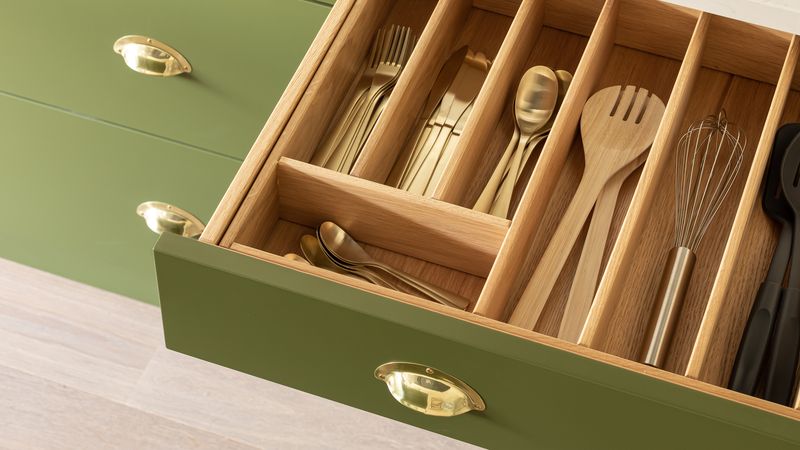
Chaotic drawers undermine kitchen efficiency, even when hidden from view. Custom drawer inserts transform jumbled messes into functional storage systems where everything has a designated spot.
Arrange utensils by frequency of use, keeping everyday items in the most accessible drawers. Consider removing items from packaging before storing – decanting pasta, grains, and snacks into uniform containers creates visual calm even inside drawers.
11. Go Digital With Recipes

Recipe boxes and random clippings create unnecessary paper clutter. Digital recipe management through apps like Paprika or simple photo albums on your phone eliminates this entirely.
For cherished family recipes, consider creating a single, beautiful cookbook to display rather than keeping loose papers. Many minimalists maintain just one inspiration cookbook on display while digitizing everything else for easy searching.
12. Maintain Consistent Materials
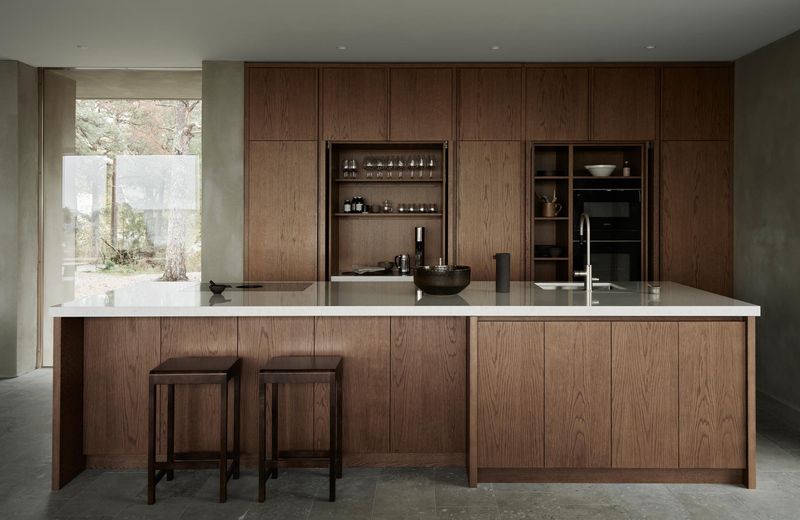
Visual cohesion comes from limiting material variety in your kitchen. Choose 2-3 main materials (like wood, stainless steel, and stone) and stick with them throughout the space.
When everything follows a consistent material palette, even functional items become part of the design. Wooden cutting boards, stainless appliances, and stone countertops create a harmonious look without trying too hard. This approach automatically eliminates mismatched, chaotic elements.
13. Purge Expired Food Regularly
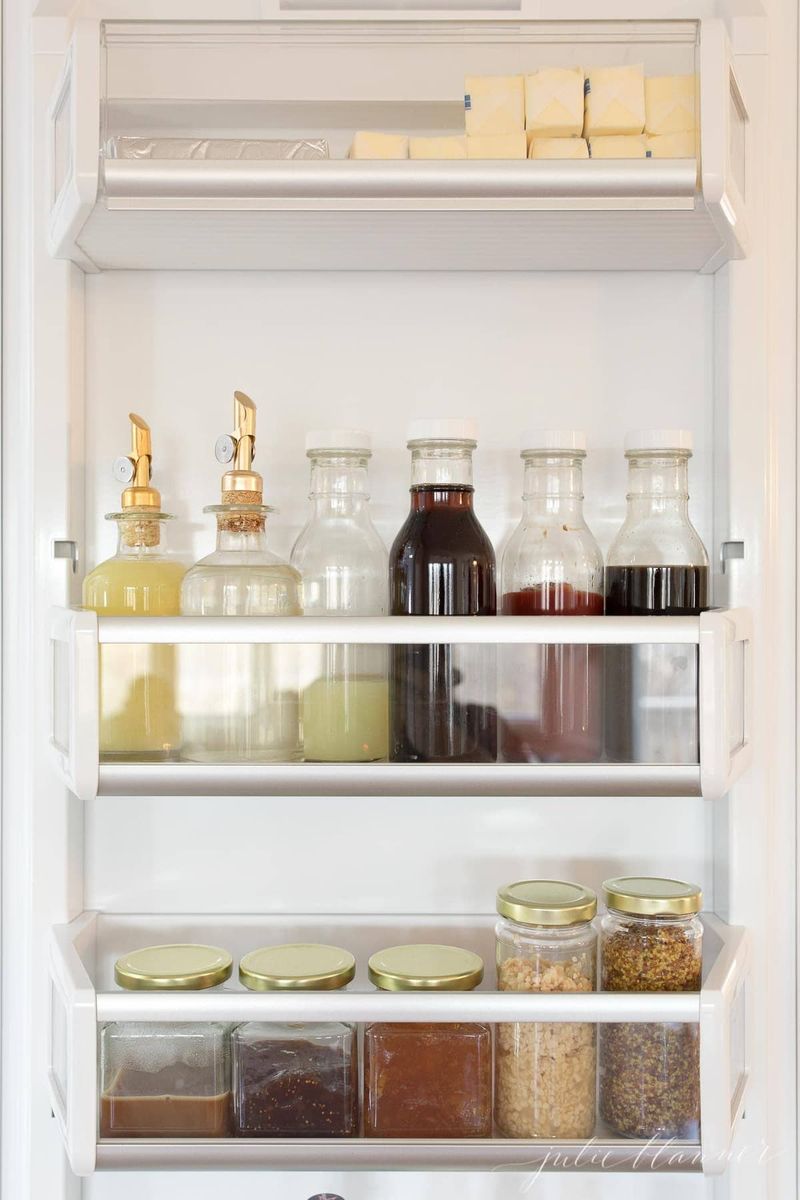
Nothing contradicts minimalist principles quite like expired condiments hiding in your refrigerator door. Schedule monthly pantry and refrigerator audits to eliminate food waste.
When shopping, buy smaller quantities more frequently rather than stockpiling. This prevents waste and frees up valuable storage space. Many minimalists find that seeing exactly what food they have encourages more creative cooking and less takeout.
14. Reduce Wall Decorations
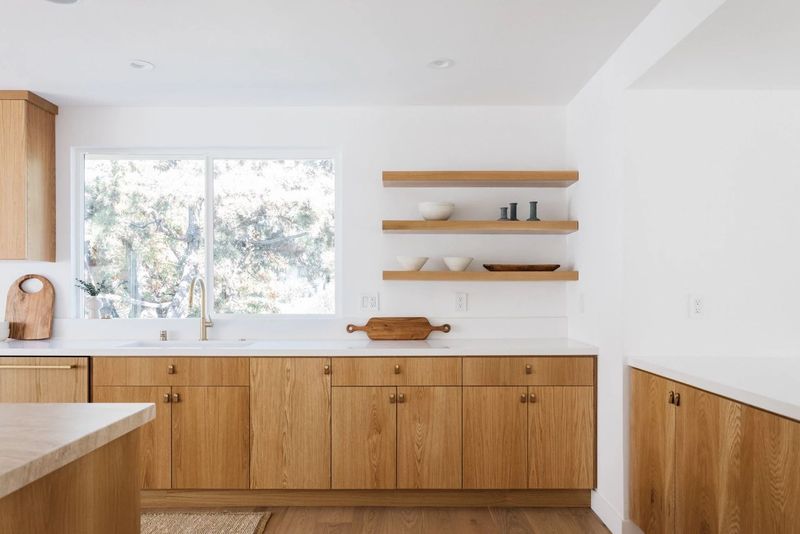
Kitchen walls often become galleries of calendars, children’s artwork, and random magnets. While personal touches matter, too many wall items create visual chaos.
Choose one statement piece or a small, curated collection rather than covering every inch. Some minimalists prefer leaving walls completely bare, letting architectural features and quality materials speak for themselves. The resulting visual breathing room feels surprisingly luxurious.
15. Add Under-Cabinet Lighting
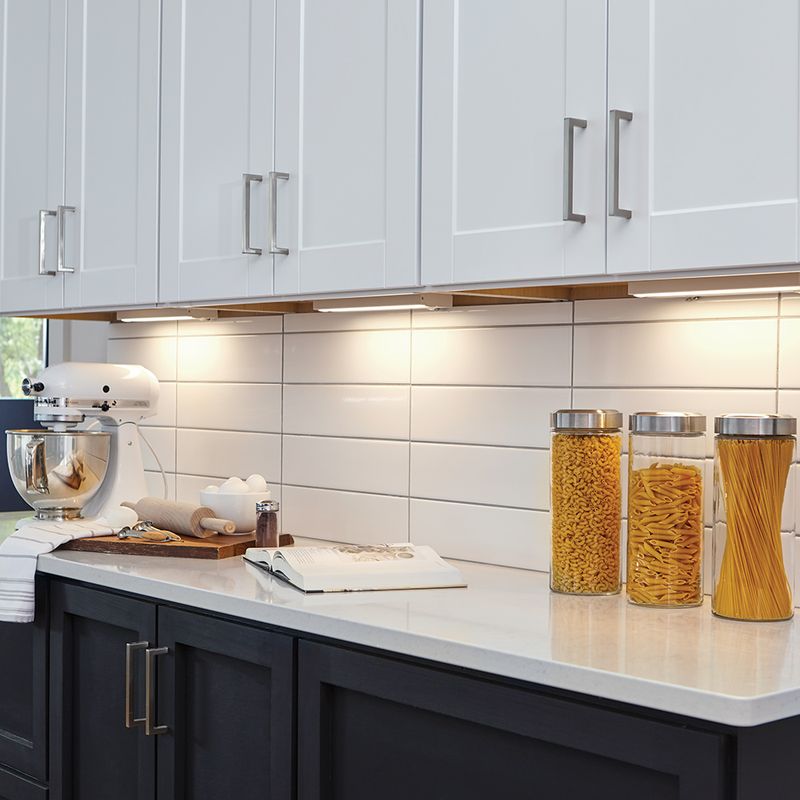
Strategic lighting transforms kitchen functionality without adding clutter. Under-cabinet LED strips provide targeted task lighting exactly where you need it.
Beyond practicality, good lighting creates atmosphere. Dimmable options let you adjust from bright food prep illumination to subtle ambient evening lighting. This single addition makes countertops more usable while eliminating the need for space-consuming table lamps.
16. Standardize Food Containers

Mismatched food storage creates visual chaos even behind closed doors. Investing in a single container system with interchangeable lids brings immediate pantry harmony.
Glass containers with uniform shapes stack more efficiently than random plastic containers. Square and rectangular containers maximize space compared to round ones. This simple switch makes food storage more efficient while creating a satisfyingly organized aesthetic.
17. Simplify Your Spice Collection
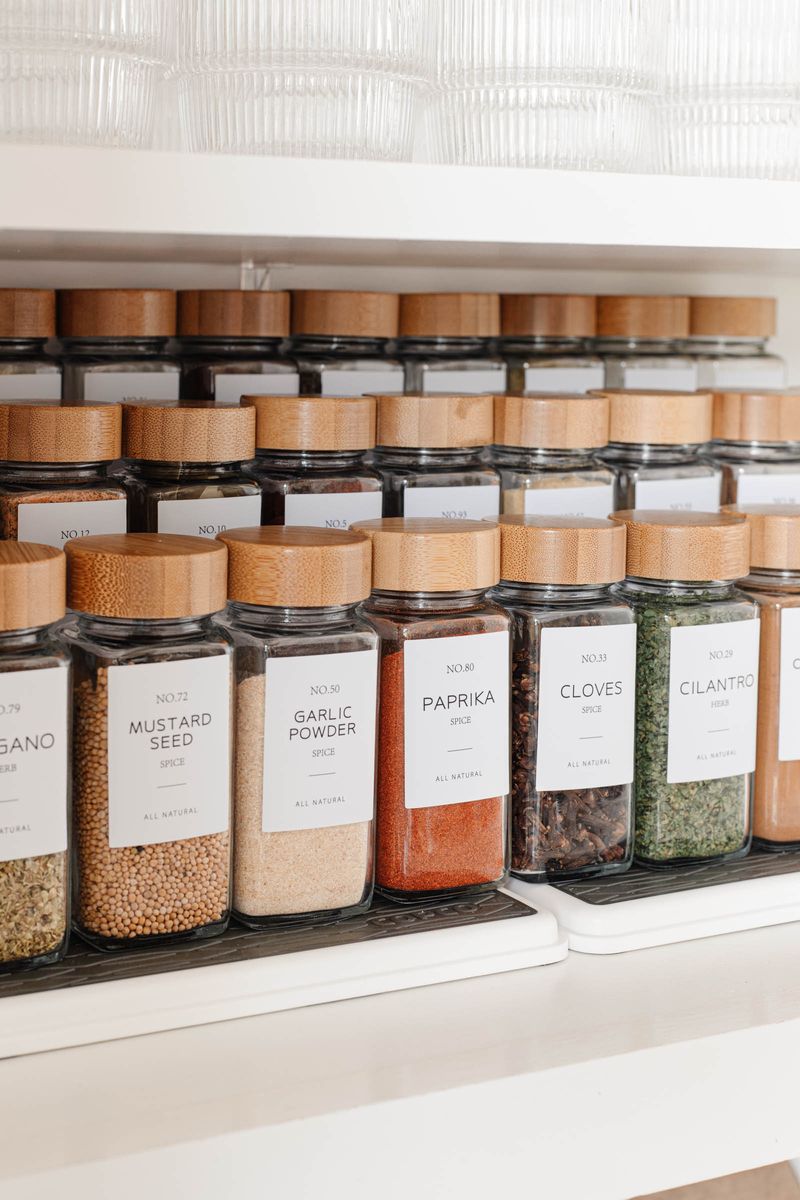
Expired, rarely-used spices occupy precious kitchen real estate. Conduct an honest assessment – when did you last use that specialty seasoning purchased for a single recipe?
Keep only frequently used spices, and transfer them to matching containers with simple labels. Some minimalists prefer clear alphabetical organization, while others group by cuisine or frequency of use. Either way, consistency creates visual calm.
18. Celebrate Empty Space

Contrary to conventional wisdom, not every shelf needs to be filled. Intentional empty space creates visual breathing room that defines minimalist design.
Allow some shelves to remain partially empty rather than filling every inch. This negative space highlights your carefully chosen items and creates a sense of calm. Remember, minimalism celebrates the space between things as much as the things themselves.
19. Reassess Regularly
Minimalism isn’t a one-time project but an ongoing practice. Schedule quarterly kitchen audits to prevent clutter from sneaking back in.
Ask tough questions about new acquisitions: Does this replace something? Where will it live? Do I truly need it? Many minimalists follow a one-in-one-out rule for kitchen items. This maintenance mindset preserves your hard-won simplicity.