20 New Rules Of Kitchen Design You’d Be Surprised With
Kitchen design has evolved dramatically in recent years, breaking away from traditional rules we once considered gospel.
Today’s kitchens blend functionality with unexpected aesthetic choices that might have seemed outrageous just a decade ago. Ready to discover how the rulebook has been completely rewritten? These fresh approaches might inspire your next renovation project!
1. Dark cabinets over light ones
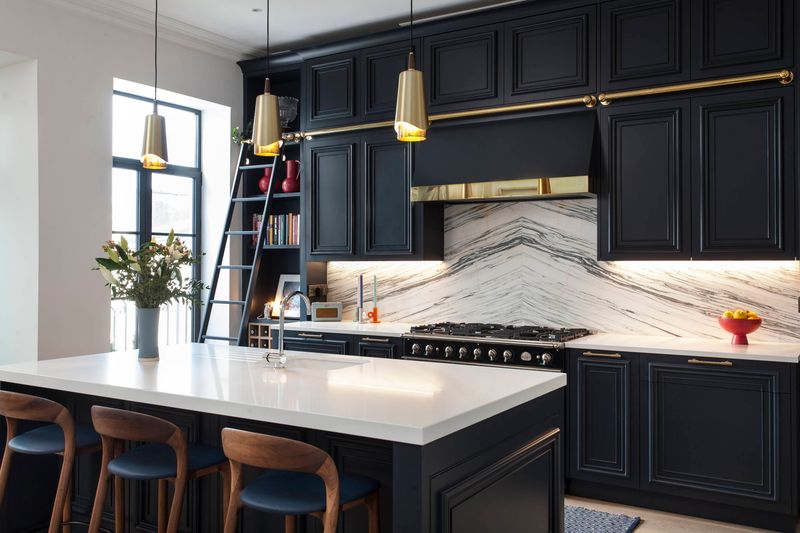
Gone are the days when white kitchens reigned supreme. Moody, sophisticated tones create dramatic backdrops that hide everyday stains better than their lighter counterparts.
Interior designers now recommend deep navy, forest green, or matte black finishes to add depth and character. Darker hues make smaller kitchens feel intentional and luxurious rather than cramped.
2. Mixing open and closed storage boldly
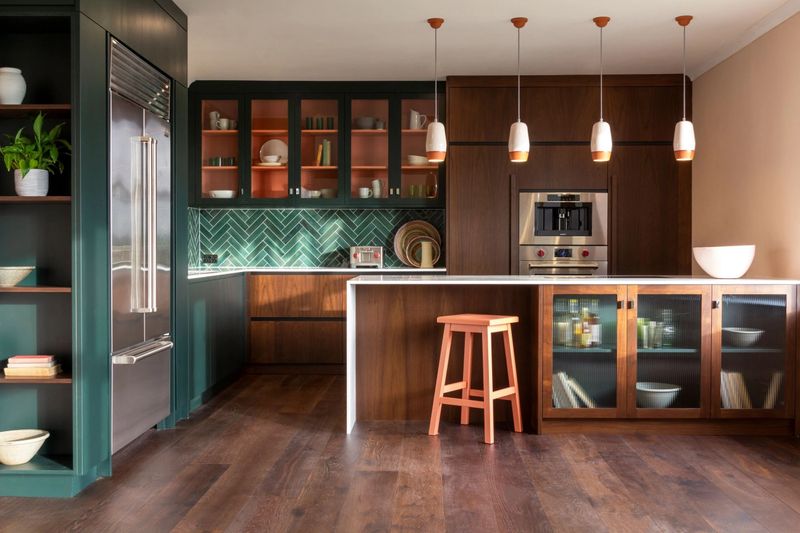
Why choose between displaying your beautiful dishware or hiding the cereal boxes when you can have both? Smart designers are creating visual interest through intentional storage contrasts.
Strategically combining open shelving for decorative items with closed cabinets for everyday necessities gives kitchens personality while maintaining functionality. It allows for seasonal decor changes without complete renovations.
3. Prioritizing countertops over cabinet space
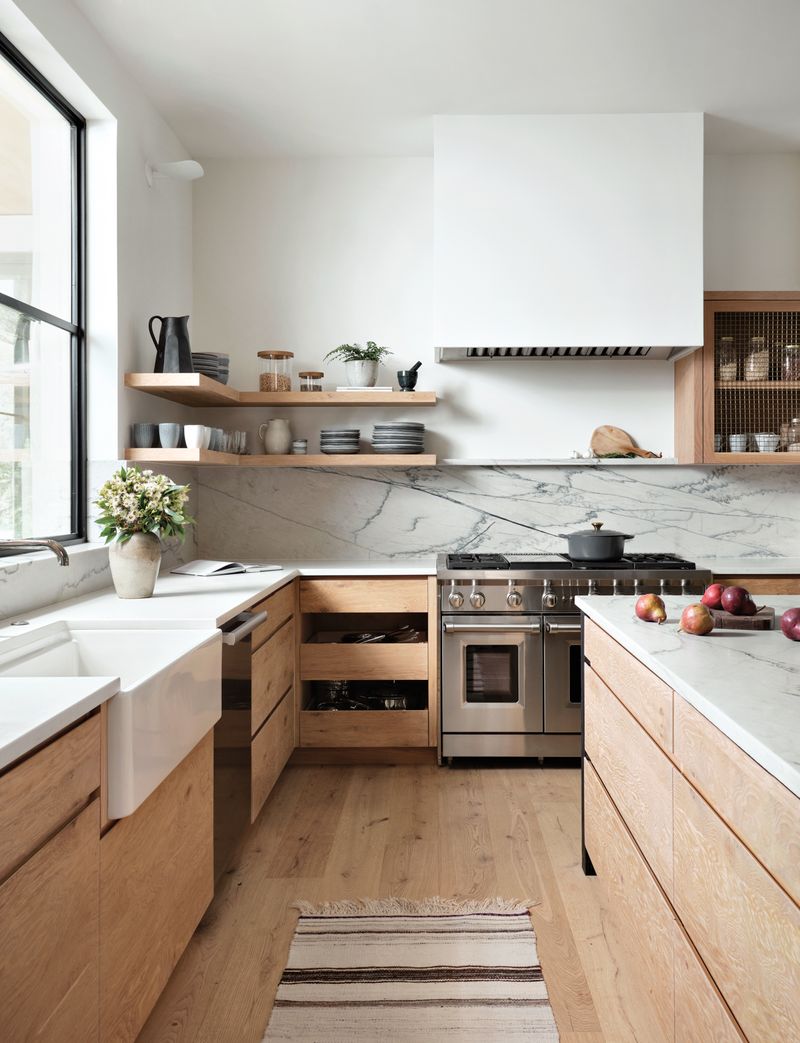
Forget stuffing every pot and gadget into overpacked cabinets. Modern kitchens favor expansive countertops that provide ample workspace for serious cooking and entertaining.
Minimalists are embracing fewer upper cabinets in exchange for uninterrupted counter surfaces. With thoughtful organization systems below, this approach creates visual breathing room while supporting how people actually use their kitchens today.
4. Hiding the fridge completely
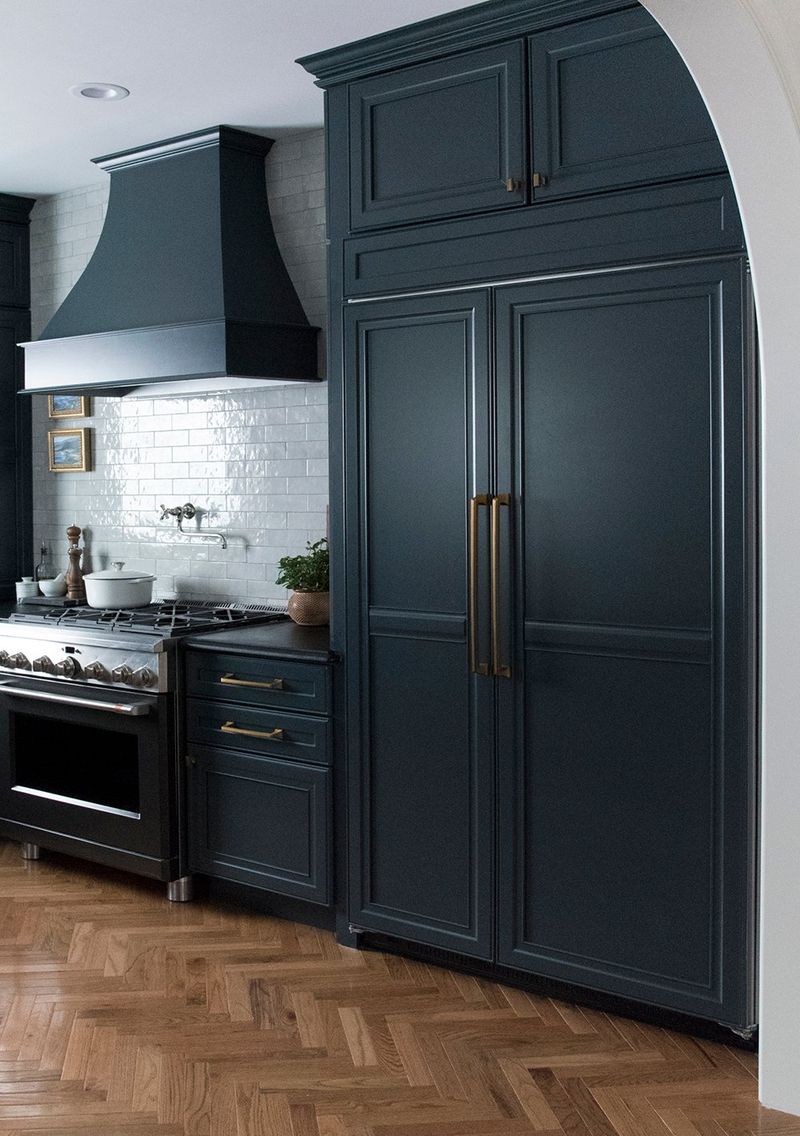
Who made the rule that refrigerators must announce their presence? Innovative designers are now concealing these appliances behind cabinet panels for a seamless look.
A fridge that visually disappears into cabinetry makes the kitchen feel cohesive and furniture-like. Integration removes the industrial appliance look, creating a sophisticated, residential atmosphere that flows with adjacent living spaces.
5. Installing ovens at eye level only
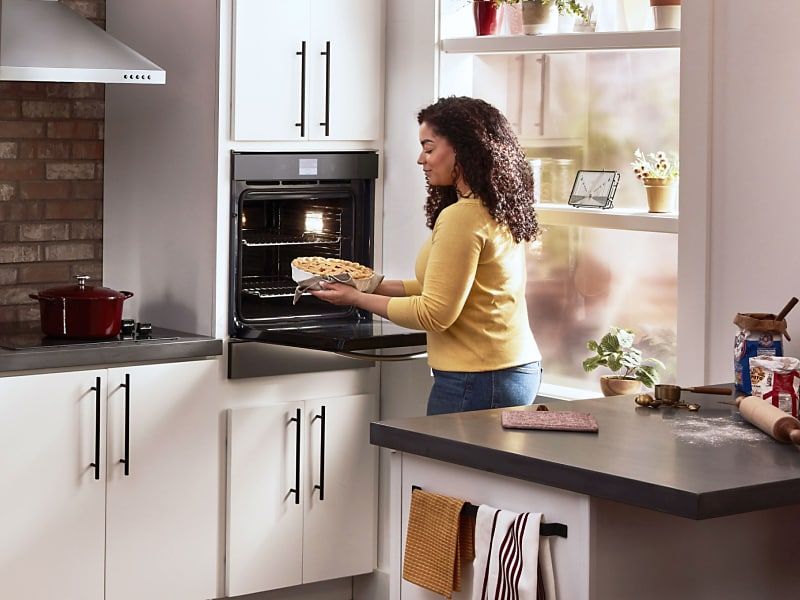
Bending down to check on your roast chicken? Not anymore! Forward-thinking designers have moved ovens up where you can actually see them without contorting yourself.
Wall-mounted ovens at eye level offer ergonomic benefits and increased safety. This placement prevents dangerous reaching over hot surfaces and makes cooking more accessible for everyone, regardless of mobility issues or height.
6. Ignoring symmetry for function
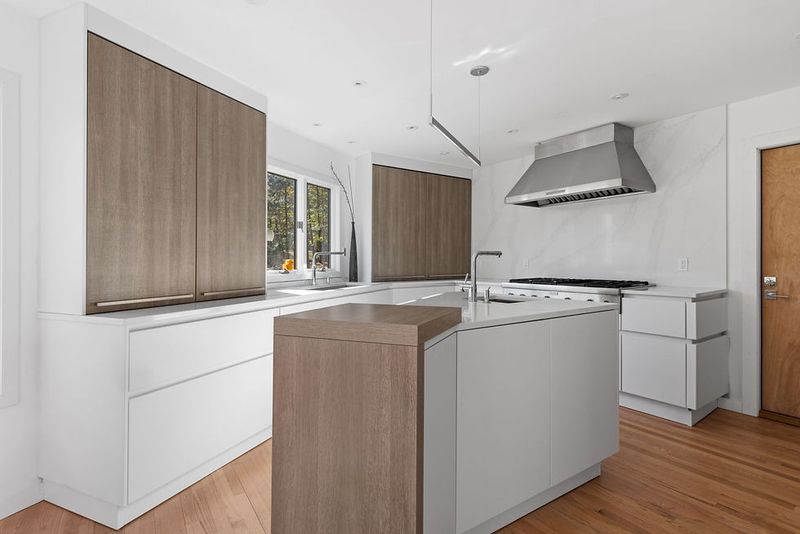
Perfectly balanced kitchen layouts? How 2010! Today’s most functional kitchens embrace asymmetry that serves real-life cooking needs rather than visual perfection.
Forcing identical cabinet widths or perfectly centered islands is out. Designers create zones based on workflow, such as extra-wide drawers near the cooking area or an off-center sink placement that actually makes sense for how you move through the space.
7. Using unconventional materials like concrete or leather
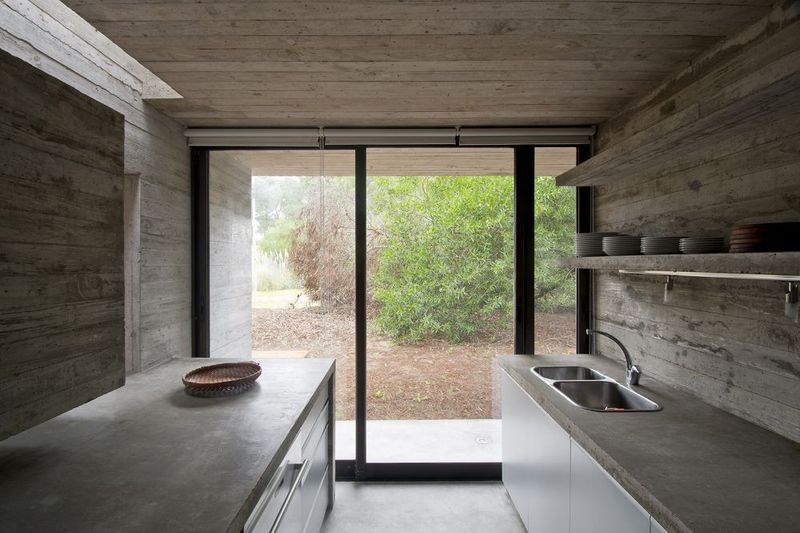
Marble and granite had their moment! Adventurous homeowners are exploring unexpected textures like polished concrete countertops, leather-wrapped cabinet pulls, or even brass waterfall edges.
These materials bring tactile interest that standard options lack. When integrated thoughtfully, concrete adds industrial chic while leather elements introduce warmth. The contrast between hard and soft surfaces creates kitchens with personality that can’t be achieved through catalog-ordered finishes.
8. Open shelves replacing upper cabinets
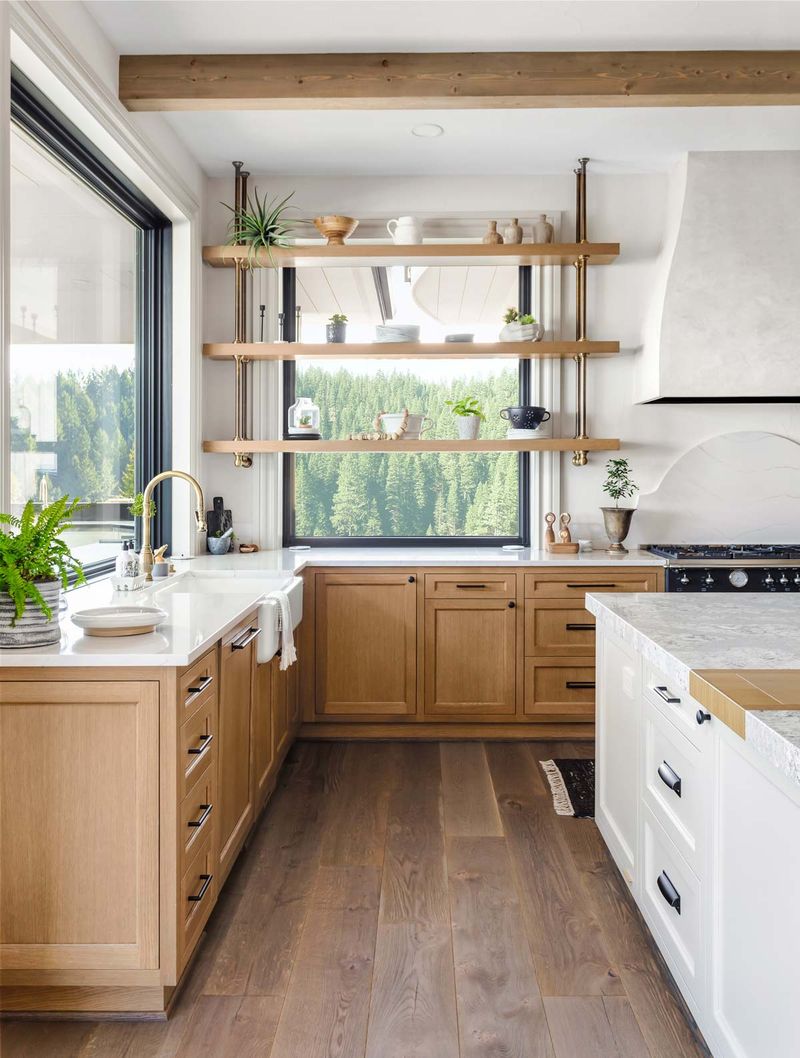
Kitchens are shedding their boxed-in feeling as floating shelves take the place of traditional upper cabinets. This isn’t just about aesthetics—it’s about creating breathing room.
With carefully curated dishware and glassware on display, these shelves encourage mindful ownership of fewer, better things. The resulting airiness makes compact kitchens feel larger while providing easy access to everyday items without opening and closing doors.
9. Minimalist sinks with integrated cutting boards
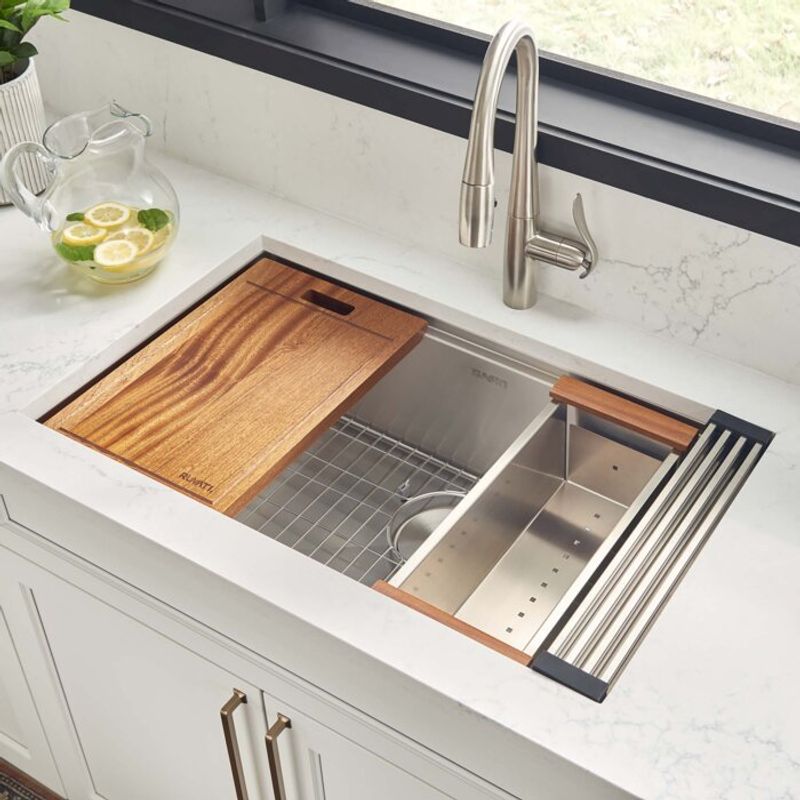
Cluttered countertops, begone! Smart homeowners are installing sleek workstation sinks with sliding components that maximize functionality in minimal space.
Fixtures with integrated cutting boards, colanders, and drying racks slide across the basin. When not in use, they create a clean look while eliminating the need for separate counter space—perfect for compact kitchens or streamlined workflows.
10. Bold wallpaper in the kitchen zone
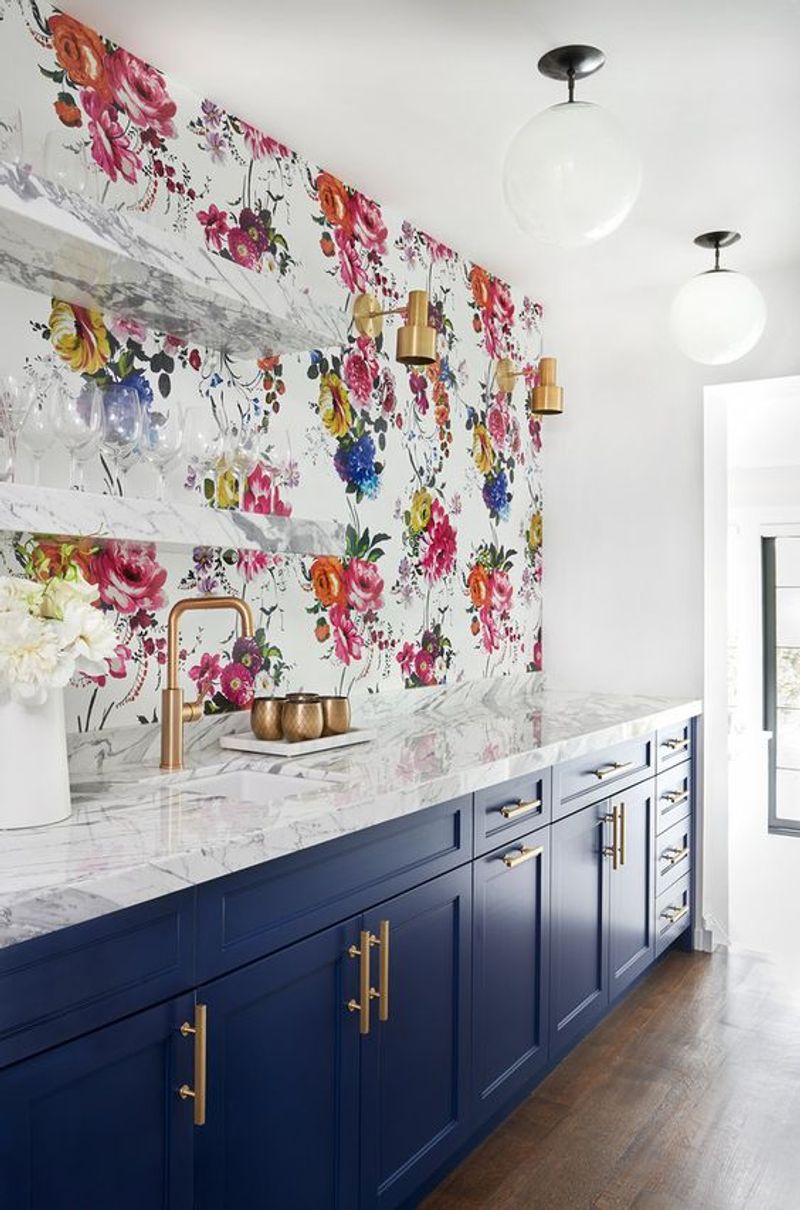
Remember when kitchens were limited to washable paint and backsplash tiles? That rule has been gloriously shattered with the introduction of moisture-resistant wallpapers designed specifically for culinary spaces.
A dramatic botanical print or geometric pattern can transform an ordinary kitchen into a conversation piece. Designers are using these statement walls to define dining zones or accentuate architectural features, proving kitchens deserve decorative treatments once reserved for living spaces.
11. Mixing metals without matching
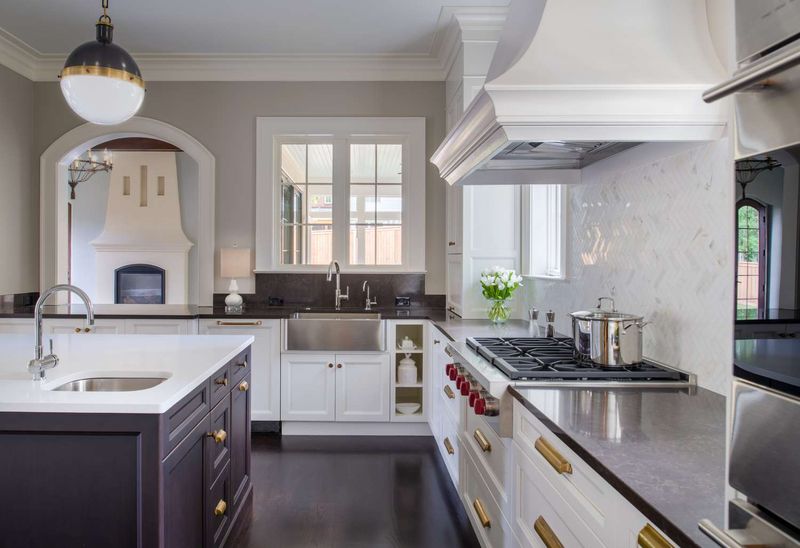
The matchy-matchy metal rule has officially been tossed out. Creative designers are confidently combining brass faucets with stainless appliances and matte black hardware for rich, layered looks.
Mixing metals creates visual interest that evolves beyond passing trends. The secret lies in repetition—introducing each metal at least twice throughout the space ensures the combination feels intentional rather than accidental or mismatched.
12. Turning islands into multi-use zones
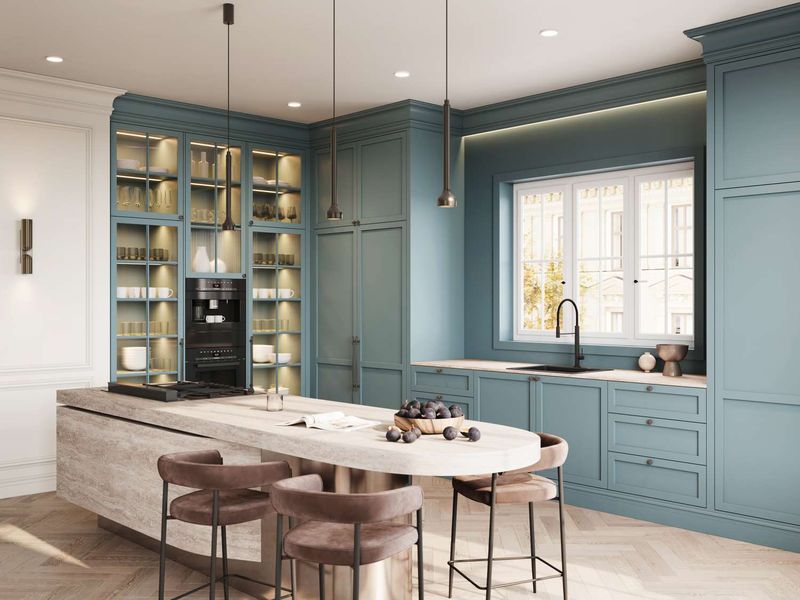
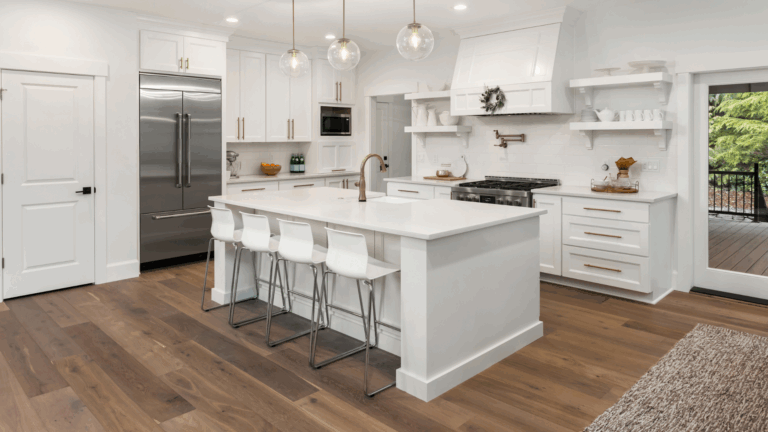
Islands aren’t just for prep work anymore. Forward-thinking homeowners are designing these centerpieces to serve multiple functions simultaneously—from homework station to dining table to storage powerhouse.
Smart islands now feature varied counter heights, built-in charging stations, and specialized storage. This multi-functionality eliminates the need for separate rooms dedicated to activities that naturally gravitate to the kitchen anyway, making these islands true lifestyle hubs.
13. No handles on cabinets as a rule
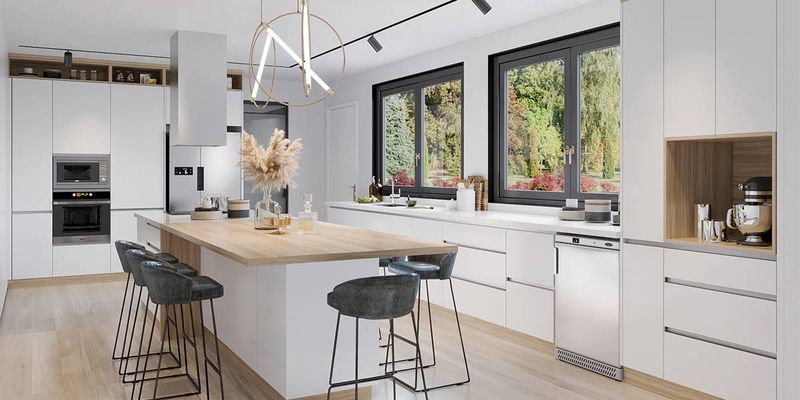
Finger pulls and push-latch mechanisms have revolutionized kitchen aesthetics by eliminating the visual clutter of traditional hardware. The result? Clean, uninterrupted cabinet faces that create a seamless look.
Beyond pure aesthetics, handle-free cabinets prevent clothing snags and hip bruises in narrow passages. They also simplify cleaning by reducing nooks where dust and cooking residue can accumulate—a practical benefit disguised as minimalist design.
14. Smart faucets that respond to voice commands
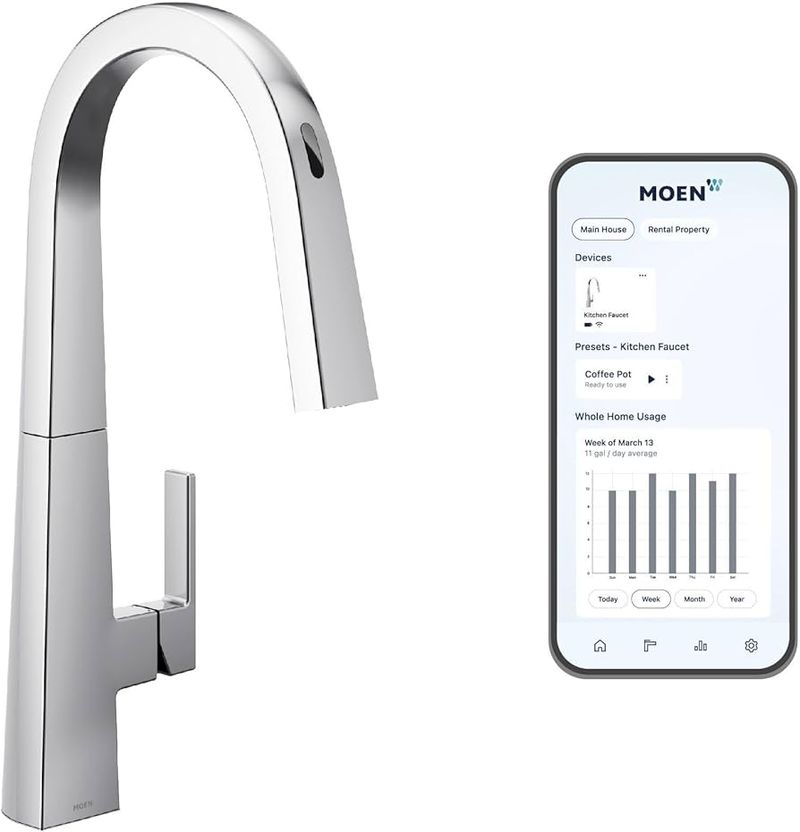
Imagine turning on your kitchen faucet without touching it when your hands are covered in bread dough. Voice-activated fixtures are making this convenience mainstream rather than futuristic fantasy.
Parents especially appreciate the safety features that prevent scalding, while cooking enthusiasts love the ability to call out measurements while continuing their culinary creations.
15. Concealed trash bins mandatory
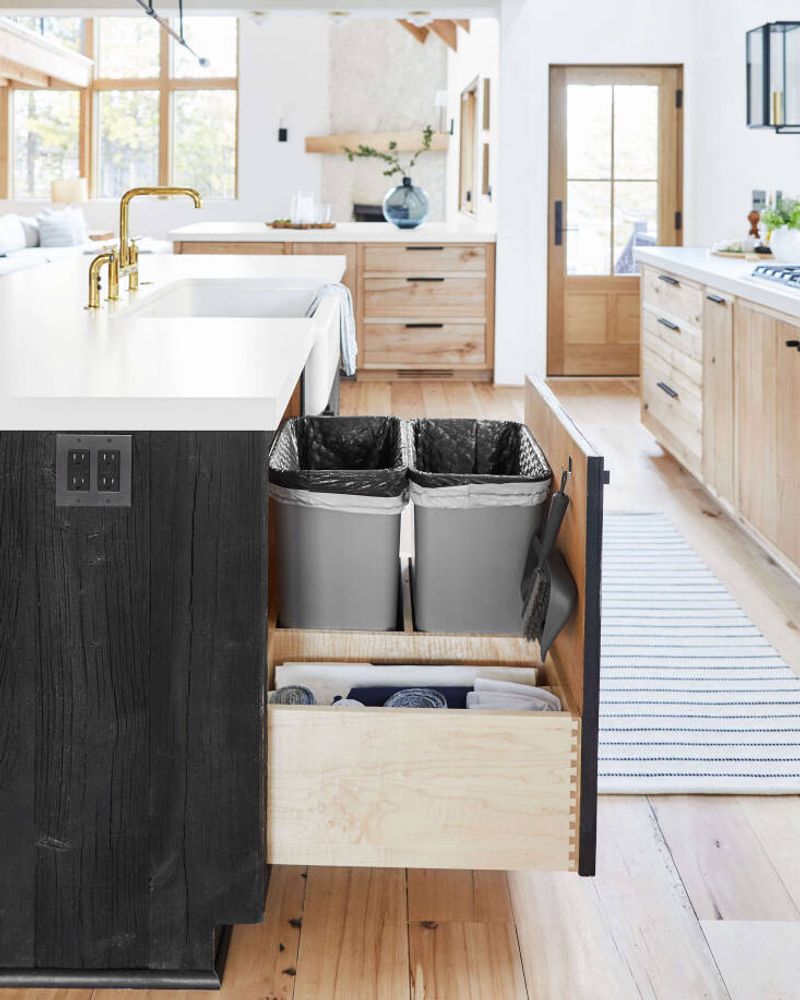
Nothing kills kitchen aesthetics faster than a visible garbage can. Innovative cabinetry now incorporates pull-out waste systems hidden behind facades that match surrounding drawers.
The best designs include separate compartments for recycling, compost, and landfill waste. Some systems even include odor-controlling features—proving functionality and beauty can coexist perfectly.
16. Statement lighting as the centerpiece
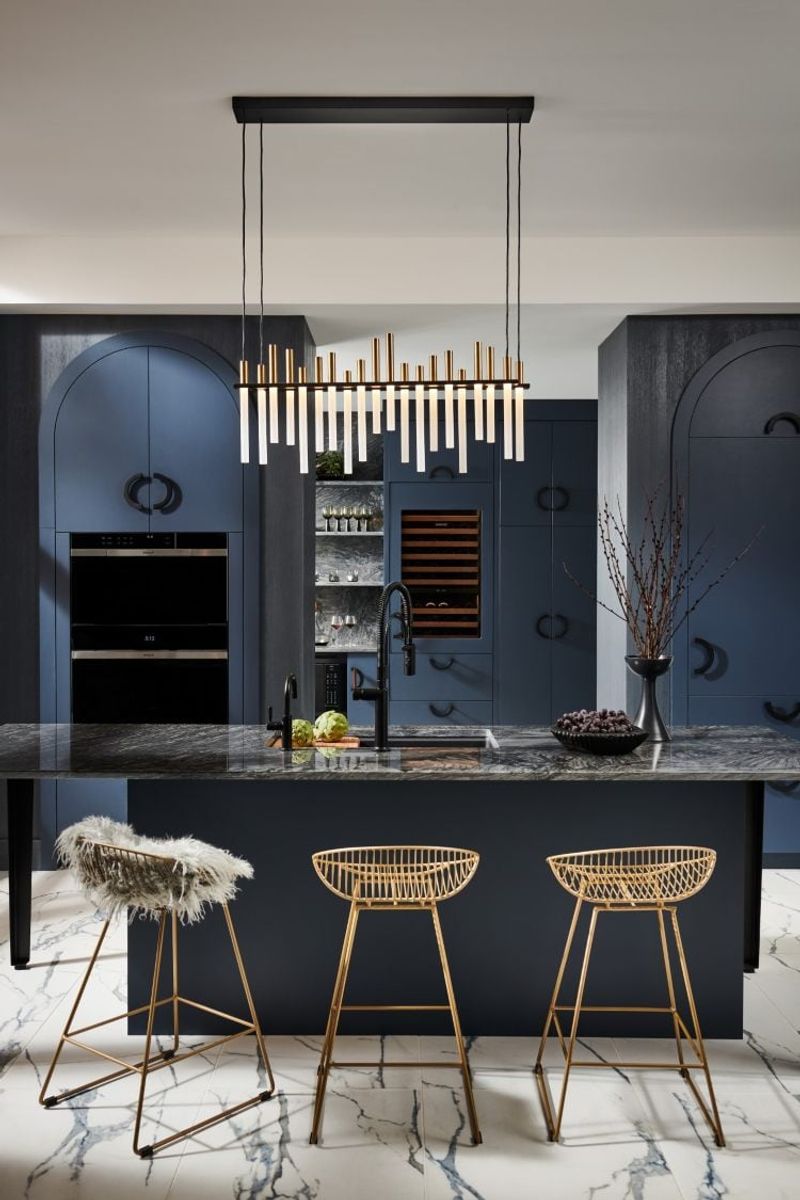
Recessed can lights are taking a backseat to dramatic fixtures that serve as functional art pieces above islands and dining areas. These architectural elements add personality that standard lighting simply can’t match.
Overscaled pendants or sculptural chandeliers create focal points that draw the eye upward, making ceilings appear higher. Many homeowners are selecting lighting first and designing the rest of the kitchen around these statement pieces—a complete reversal of traditional design order.
17. Using rug runners instead of mats
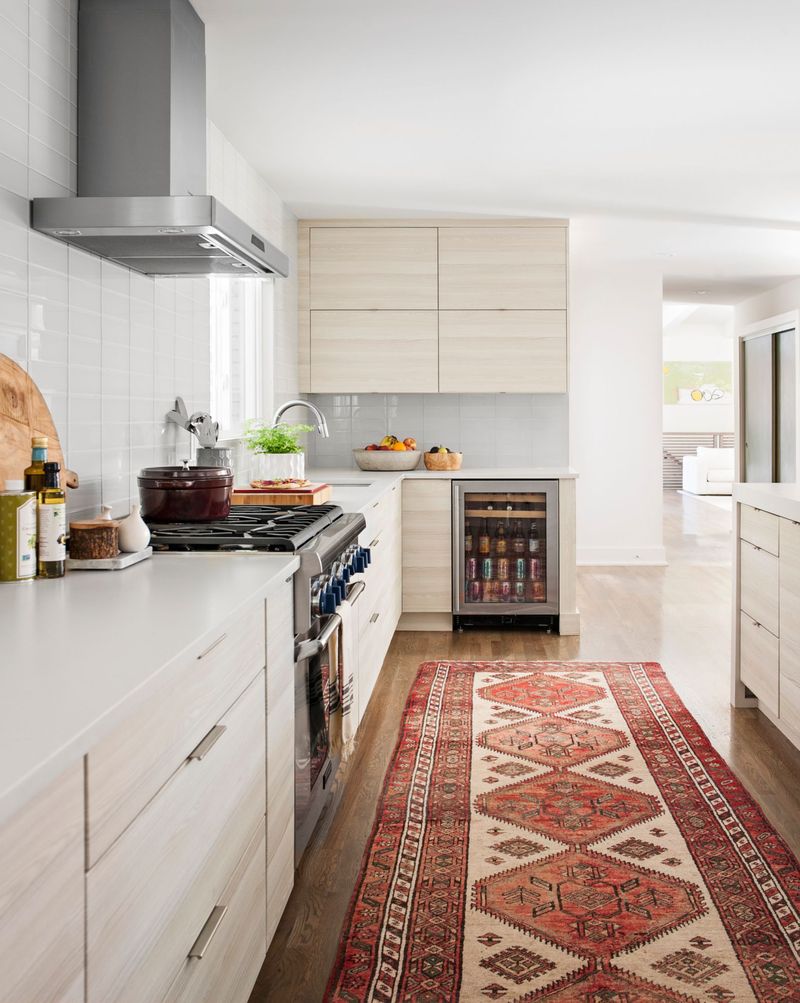
Flimsy kitchen mats are being replaced by sophisticated vintage-inspired runners that bring warmth and character to utilitarian spaces. These textile statements transform kitchen floors into design opportunities rather than afterthoughts.
The best choices feature low-pile construction and stain-resistant materials that balance practicality with visual appeal—proof that even the most functional spaces deserve beautiful details.
18. Avoiding traditional tile backsplashes
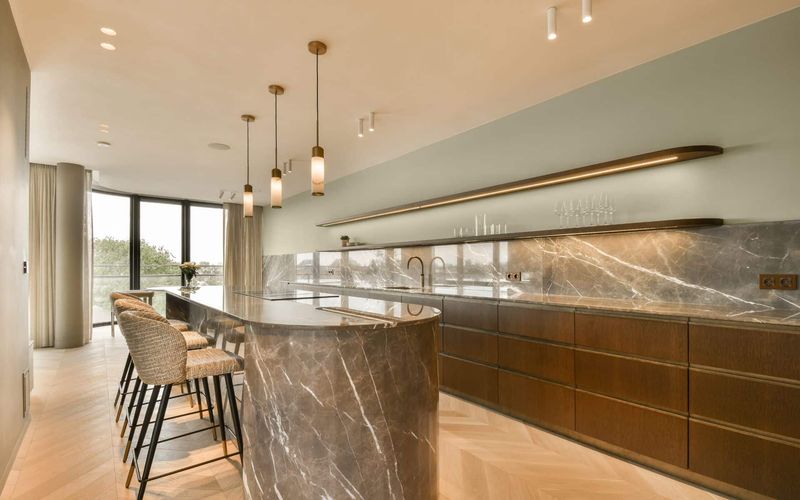
Creative homeowners are embracing unexpected backsplash alternatives like waterproof wallpaper, continuous countertop material, or even textured glass panels.
Extending countertop stone up the wall creates a seamless, luxurious look without grout lines to clean. For those seeking drama, large-format porcelain slabs with bold veining make striking statements. These alternatives offer easier maintenance while breaking free from cookie-cutter kitchen design.
19. Prioritizing natural light over artificial
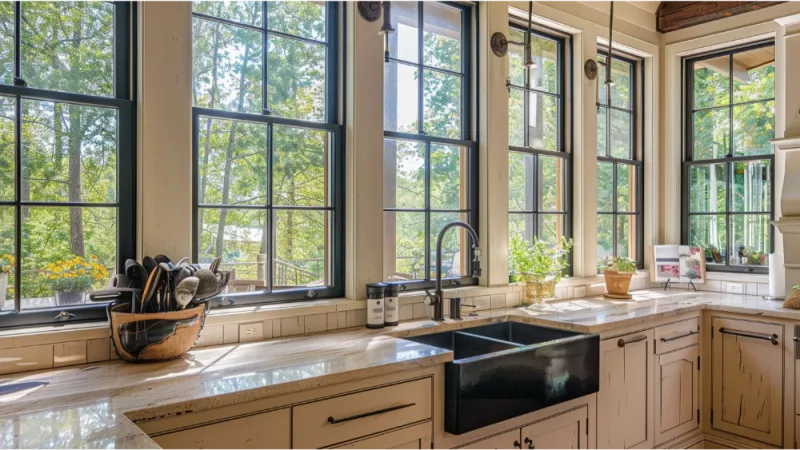
Architects are rethinking kitchen placement within homes, positioning these spaces where they capture optimal daylight rather than relegating them to interior locations. This fundamental shift prioritizes wellbeing over tradition.
Expanded windows, strategically placed skylights, and even glass interior walls allow sunlight to penetrate deeper into cooking spaces. This natural illumination not only reduces energy costs but also creates more inviting environments that connect seamlessly with outdoor views.
20. Compact kitchens with fold-away elements
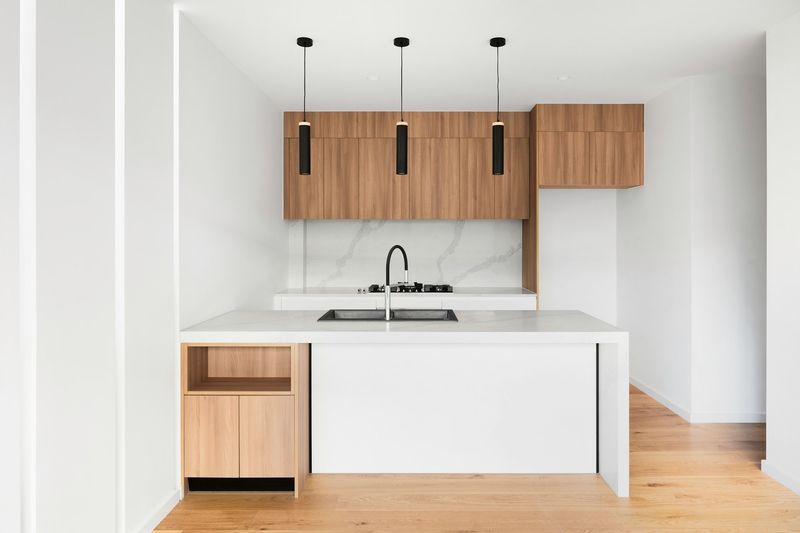
Inspired by tiny homes and urban apartments, even spacious residences are incorporating clever fold-away components that transform kitchen functionality throughout the day.
Pull-down tables, retractable countertop extensions, and appliance garages with lift-up doors maintain clean lines when not in use. Such designs support minimalist aesthetics while acknowledging that kitchens don’t need to display all their capabilities simultaneously—making them more adaptable to changing needs.