17 Millionaire Mansions That Allow Public Tours
Ever wondered how the ultra-wealthy lived during America’s golden age of opulence? Across the country, magnificent mansions built by industrial tycoons, Hollywood stars, and old-money families now welcome curious visitors through their ornate front doors.
These architectural masterpieces offer a rare glimpse into lives of extraordinary privilege, where no expense was spared on marble staircases, gold-leaf ceilings, and gardens that rival European palaces.
1. The Breakers – Newport, Rhode Island
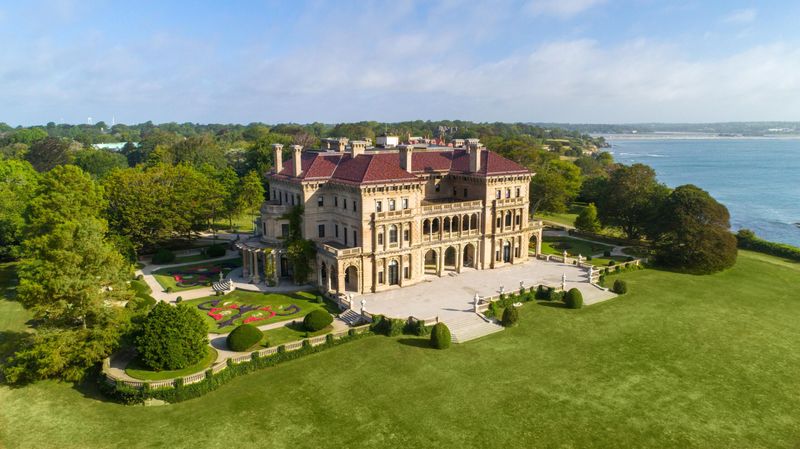
Cornelius Vanderbilt II’s summer “cottage” stands as America’s most audacious monument to Gilded Age excess. Completed in 1895, this 70-room Italian Renaissance palace cost a staggering $12 million (equivalent to $400 million today).
Imported marble covers nearly every surface, while 22-karat gold leaf adorns the ceilings. The most jaw-dropping space? The two-story Great Hall, designed specifically to make guests feel small and humbled by Vanderbilt wealth.
2. Hearst Castle – San Simeon, California
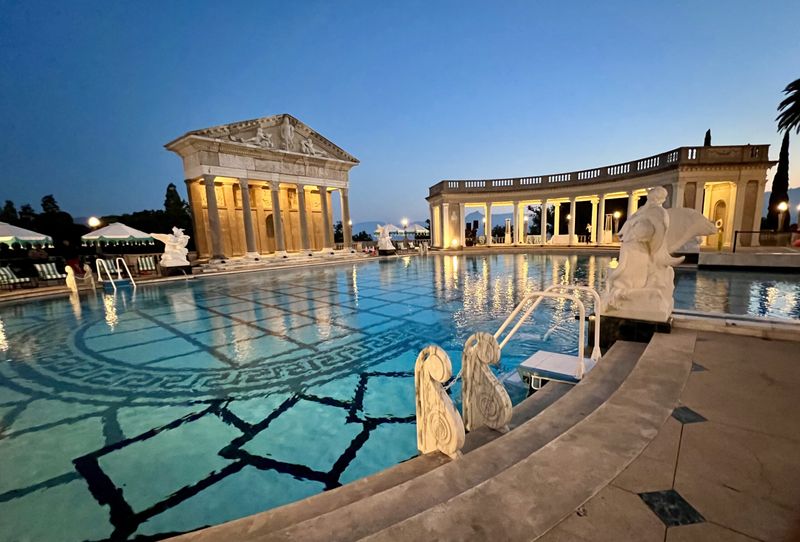
Media mogul William Randolph Hearst’s hilltop estate makes Xanadu look modest. Architect Julia Morgan spent 28 years creating this Mediterranean Revival masterpiece with 165 rooms and 127 acres of gardens.
The Neptune Pool, lined with Vermont marble and ancient Roman temple facades, remains its most photographed feature. Hollywood’s elite regularly flew in for weekends where they might find themselves dining beside actual zebras grazing on the lawn.
3. Biltmore Estate – Asheville, North Carolina
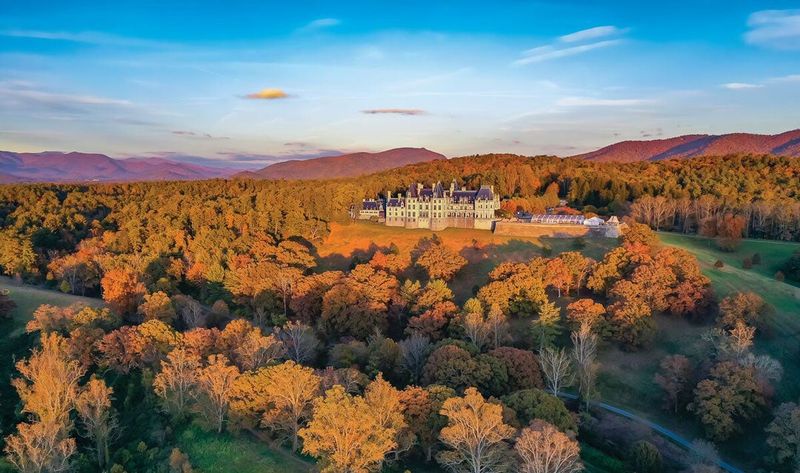
America’s largest private home still takes visitors’ breath away. George Vanderbilt’s 250-room French Renaissance chateau, completed in 1895, sprawls across 8,000 acres of Blue Ridge Mountain countryside.
The Banquet Hall ceiling soars four stories high, while the library houses over 10,000 volumes. Most remarkable might be the indoor swimming pool, bowling alley, and gymnasium – unheard-of luxuries when indoor plumbing was still considered fancy.
4. Vizcaya Museum and Gardens – Miami, Florida
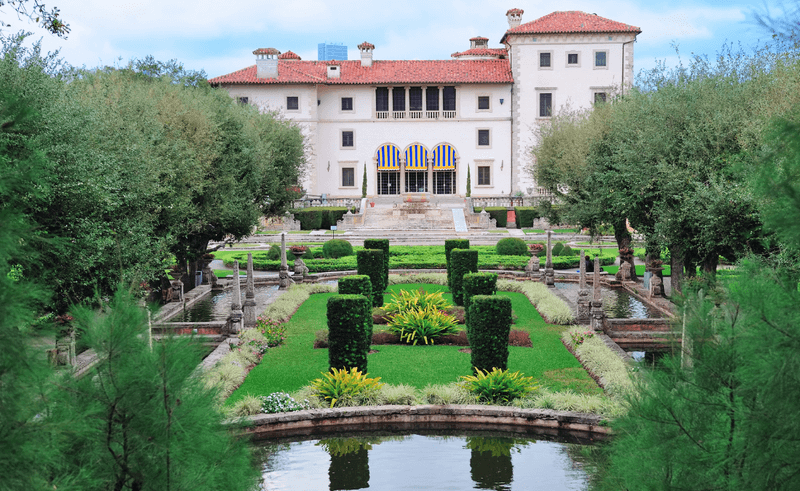
Industrialist James Deering built his tropical paradise to look ancient. Completed in 1916, this Italian Renaissance-inspired villa appears to have weathered centuries rather than decades.
Artisans from Europe crafted the 34-room mansion’s exquisite details, from hand-carved stone medallions to painted ceiling frescoes. The formal gardens, with their stone barges and hedge mazes, have hosted everyone from movie stars to Pope John Paul II.
5. The Elms – Newport, Rhode Island
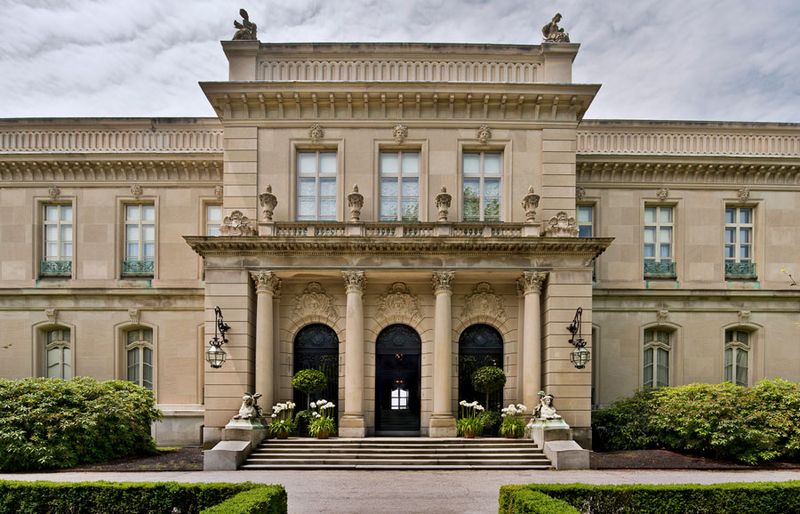
Coal baron Edward Berwind’s summer cottage makes most modern mansions look like starter homes. Built in 1901 for $1.4 million (about $45 million today), this French-inspired chateau was among America’s first homes with an electric ice maker.
The mansion’s hidden innovation? A basement complex where 40 servants lived and worked, connected by a network of service corridors. The rooftop garden party space offers the best views in Newport.
6. Fallingwater – Mill Run, Pennsylvania
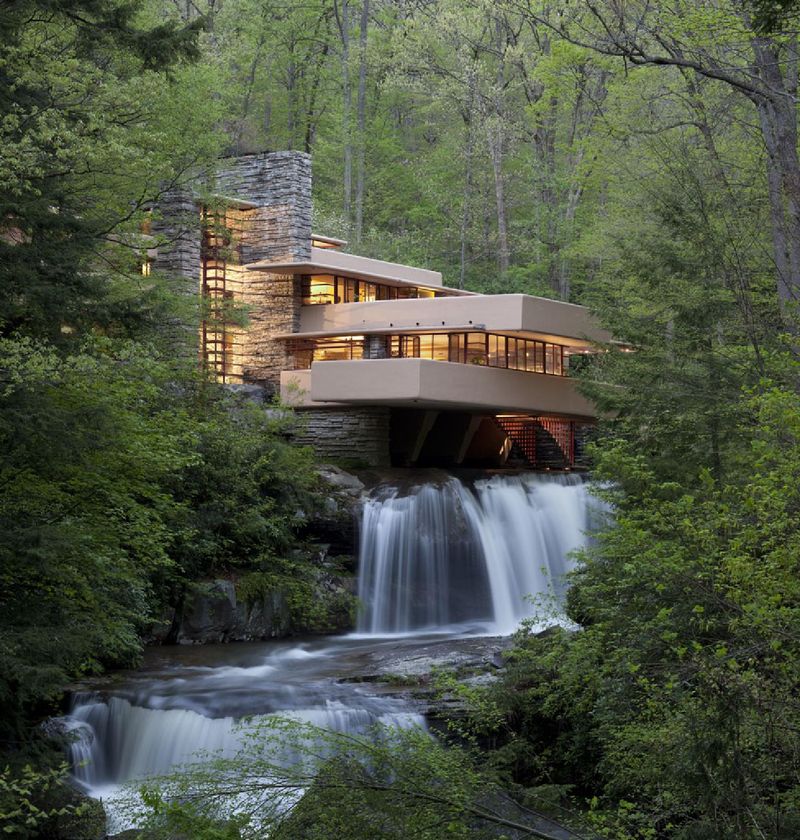
Frank Lloyd Wright’s architectural masterpiece defies gravity and conventional mansion expectations. Built in 1939 for department store owner Edgar Kaufmann, this modernist marvel appears to float above a waterfall.
Unlike gilded ballrooms of earlier eras, Fallingwater’s luxury comes from its revolutionary design that blends indoor and outdoor spaces. Native sandstone and concrete cantilevers extend dramatically over Bear Run stream, creating living spaces where water sounds permeate every room.
7. Monticello – Charlottesville, Virginia
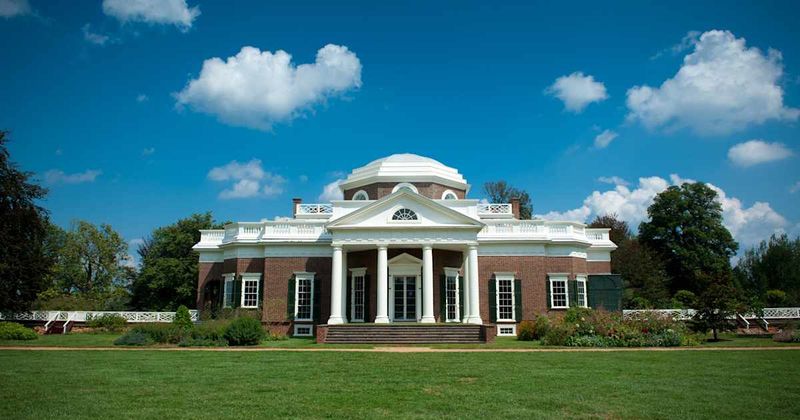
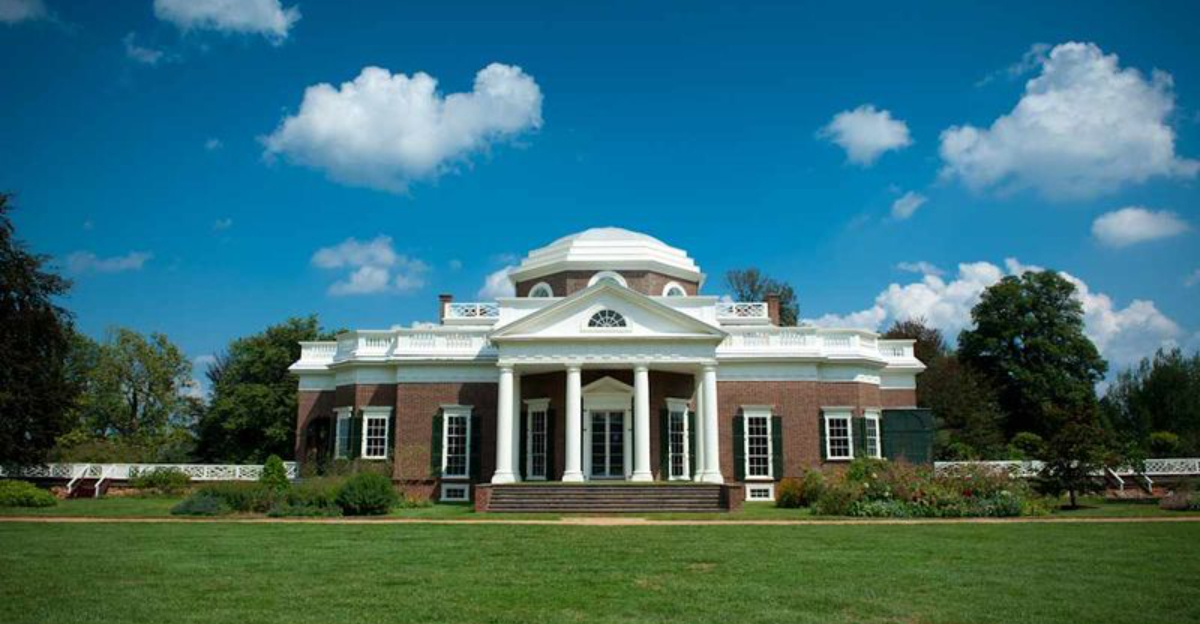
Thomas Jefferson’s architectural playground reveals America’s founding genius as a design innovator. Built and continuously redesigned over 40 years, this neoclassical estate showcases Jefferson’s obsession with clever gadgets.
Visitors marvel at the Great Clock with weights that descend through the floor, seven-day calendar doors, and a dumbwaiter hidden in the fireplace. The dome room, rarely used during Jefferson’s lifetime, remains the mansion’s most photographed feature.
8. Marble House – Newport, Rhode Island
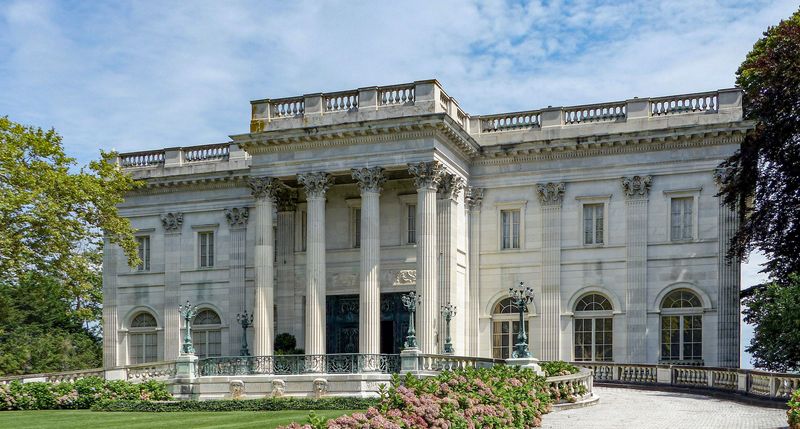
Alva Vanderbilt’s “cottage” required 500,000 cubic feet of marble and $11 million (about $310 million today). Completed in 1892, this Beaux-Arts palace was designed to outshine every other Newport mansion.
The Gold Room, inspired by Versailles’ Hall of Mirrors, contains more gold than some national treasuries. Alva used the house strategically – hosting suffragette rallies on its grounds after divorcing William K. Vanderbilt and securing her place in high society.
9. Ca’ d’Zan – Sarasota, Florida
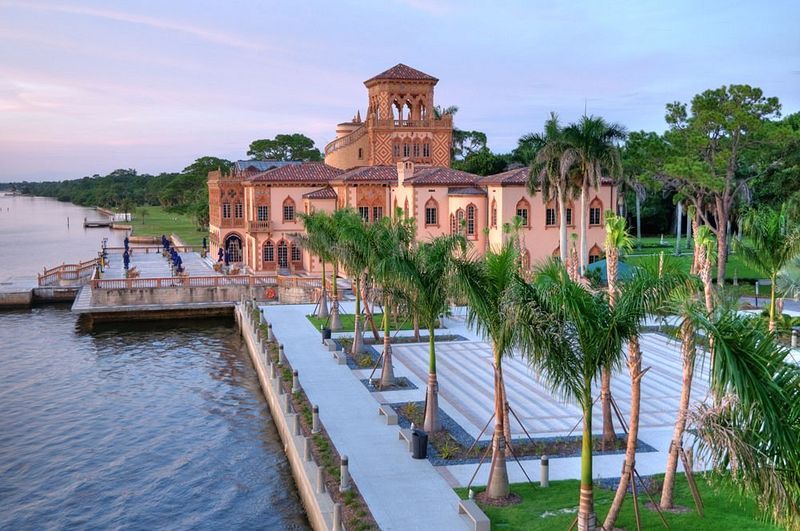
Circus king John Ringling and his wife Mable built their Venetian Gothic palace after years of collecting European art and architectural fragments. Completed in 1926 for $1.5 million (about $22 million today), the name literally means “House of John” in Venetian dialect.
The 36,000-square-foot mansion features a 41-foot-high ceiling in the Court of Davids and colorful glazed tiles throughout. The marble terrace overlooking Sarasota Bay hosted legendary parties during the Roaring Twenties.
10. Graceland – Memphis, Tennessee
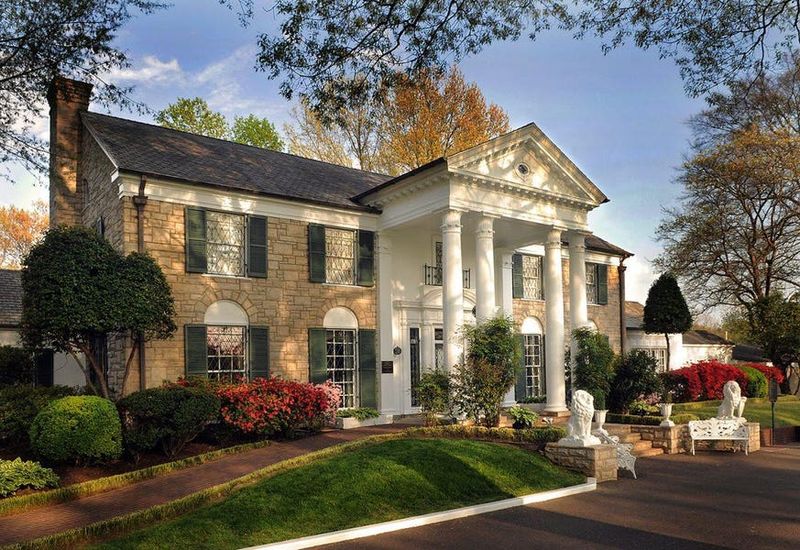
Elvis Presley’s beloved home proves not all mansions need centuries of history to become iconic. Purchased in 1957 for $102,500 (about $1 million today), this Colonial Revival house spans a modest 17,552 square feet.
The famous Jungle Room with its green shag carpet and Polynesian flair served as an impromptu recording studio. Most visitors are surprised by Graceland’s relatively modest size compared to other mansions – though the mirrored ceiling in the TV room is pure Elvis excess.
11. The Frick Collection – New York City, New York
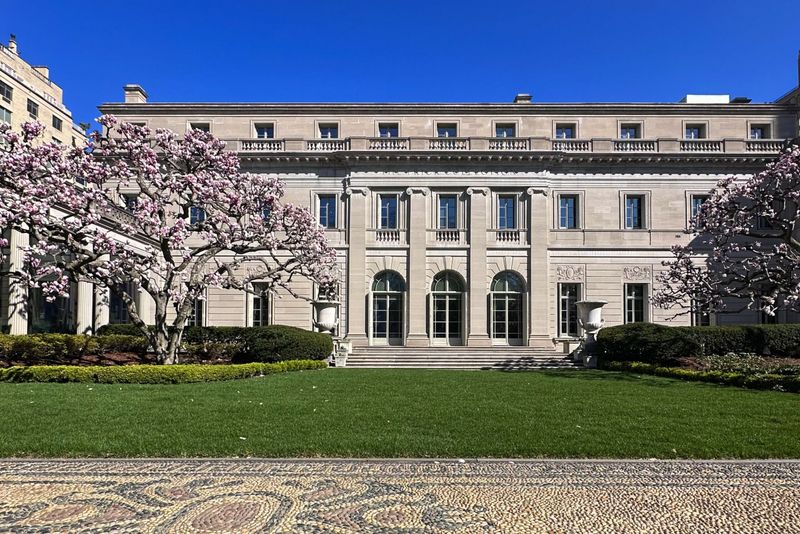
Steel magnate Henry Clay Frick built his Fifth Avenue mansion to double as a future public art museum. Completed in 1914 for $5 million (about $135 million today), this Beaux-Arts masterpiece sits across from Central Park.
The mansion’s 16 galleries house priceless works by Vermeer, Rembrandt, and Gainsborough. The indoor garden court with its reflecting pool and skylight remains exactly as the Frick family enjoyed it – though visitors sadly can’t use the bowling alley hidden in the basement.
12. Filoli – Woodside, California
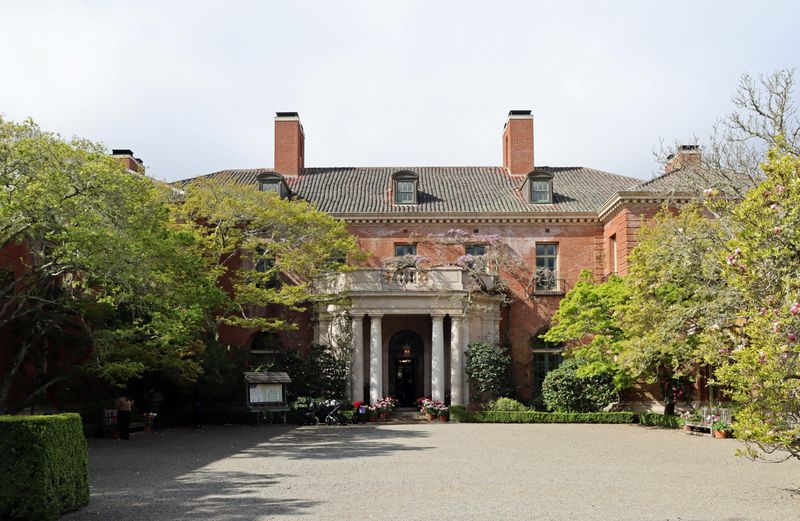
Mining magnate William Bourn created this country estate as his “fight, love, live” sanctuary (the name comes from combining the first letters of these words). Completed in 1917, this Georgian Revival mansion sits amid 16 acres of formal gardens.
The 54,000-square-foot home features a ballroom with gold-leaf ceiling and hand-carved paneling throughout. Eagle-eyed visitors might recognize it as the Carrington mansion from the 1980s TV show “Dynasty” – its most famous pop culture appearance.
13. Shangri La – Honolulu, Hawaii
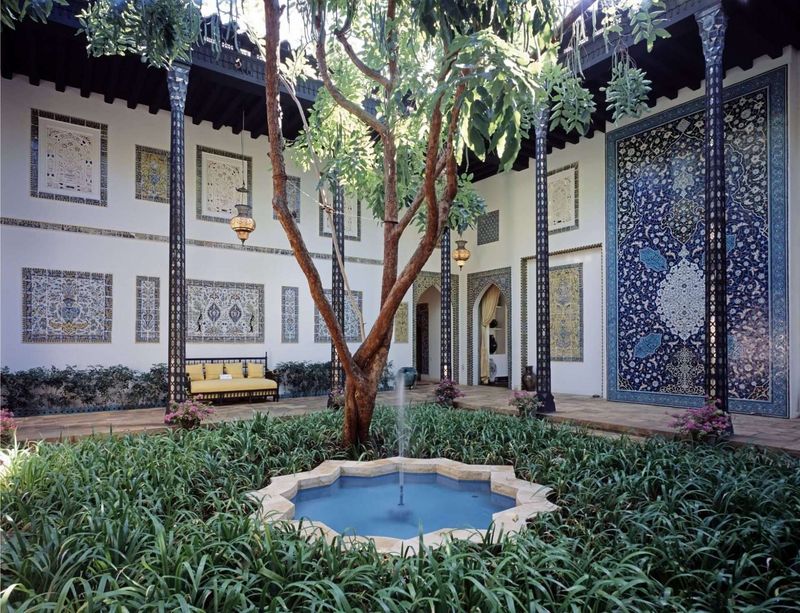
Tobacco heiress Doris Duke built her Islamic-inspired paradise after honeymooning in the Middle East. Completed in 1937, this 14,000-square-foot waterfront mansion houses her extensive collection of Islamic art.
The central courtyard features a 13th-century mihrab (prayer niche) from Iran, while custom-made Moroccan tiles adorn many surfaces. Most spectacular is the Syrian Room, where walls, ceiling and floors were created by craftsmen from Damascus using centuries-old techniques.
14. The Pittock Mansion – Portland, Oregon
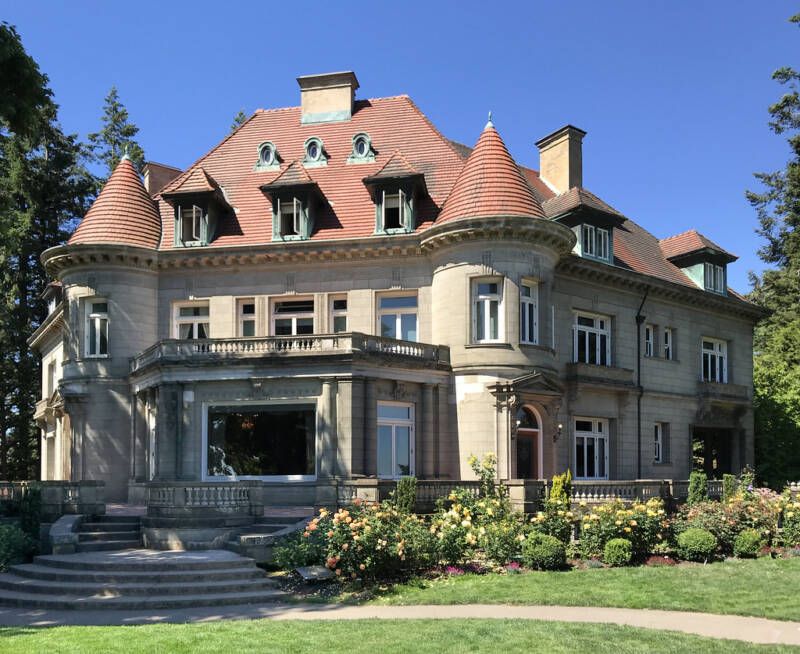
Newspaper tycoon Henry Pittock built his French Renaissance château high in the West Hills. Completed in 1914, this 16,000-square-foot mansion features panoramic views of Portland, Mt. Hood, and the Cascade Range.
Cutting-edge innovations included a central vacuum system and intercoms. The Turkish smoking room, with its ornate ceiling and built-in benches, reveals the early 20th-century fascination with exotic cultures.
15. Old Westbury Gardens – Old Westbury, New York
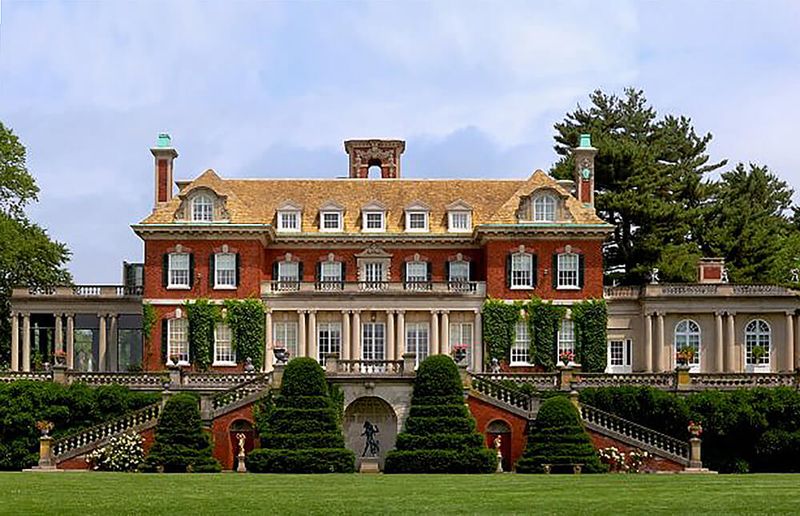
Financier John S. Phipps built this Charles II-style mansion as a wedding gift for his British bride. Completed in 1906, the 23-room estate sits amid 200 acres of formal gardens, woodlands, and ponds.
The mansion’s interiors feature English antiques and artwork collected by generations of the Phipps family. Film buffs might recognize it from movies like “North by Northwest” and “The Age of Innocence” – it’s one of Hollywood’s favorite stand-ins for old money elegance.
16. Winterthur – Wilmington, Delaware
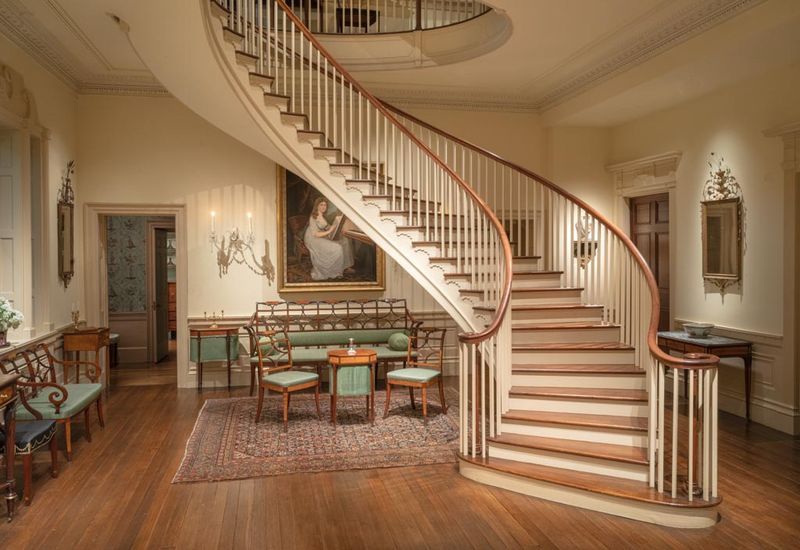
Henry Francis du Pont transformed his childhood home into America’s premier museum of decorative arts. This 175-room mansion, expanded throughout the early 20th century, houses 90,000 objects made or used in America between 1640 and 1860.
The Montmorenci staircase, salvaged from a North Carolina plantation, rises through three stories. Most impressive is the Chinese Parlor, where hand-painted wallpaper from 1770 depicts an entire garden landscape across all four walls.
17. Lyndhurst – Tarrytown, New York
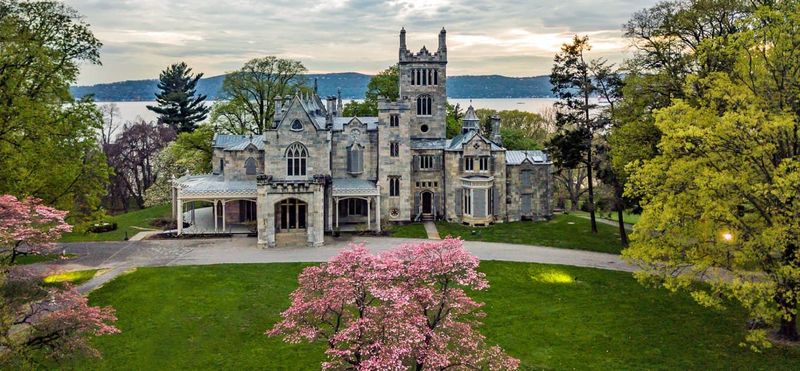
Railroad tycoon Jay Gould’s Gothic Revival castle overlooks the Hudson River in dramatic fashion. Designed in 1838 by Alexander Jackson Davis, the mansion’s pointed arches and battlements create a medieval fantasy landscape.
The 67-acre estate includes America’s first steel-framed conservatory. Most haunting is the art gallery, where original gas fixtures still hang from a vaulted ceiling painted to resemble a night sky – an early American interpretation of “mood lighting.”