15 Underrated Frank Lloyd Wright Buildings You’ve Probably Never Heard Of
Frank Lloyd Wright designed over 1,000 structures during his lifetime, but only a handful became famous worldwide. Beyond Fallingwater and the Guggenheim Museum lies a treasure trove of lesser-known Wright masterpieces waiting to be discovered.
Join me on a journey through 15 underappreciated Wright buildings that showcase his genius yet remain outside the spotlight of mainstream architecture tourism.
1. Pope-Leighey House – Alexandria, Virginia
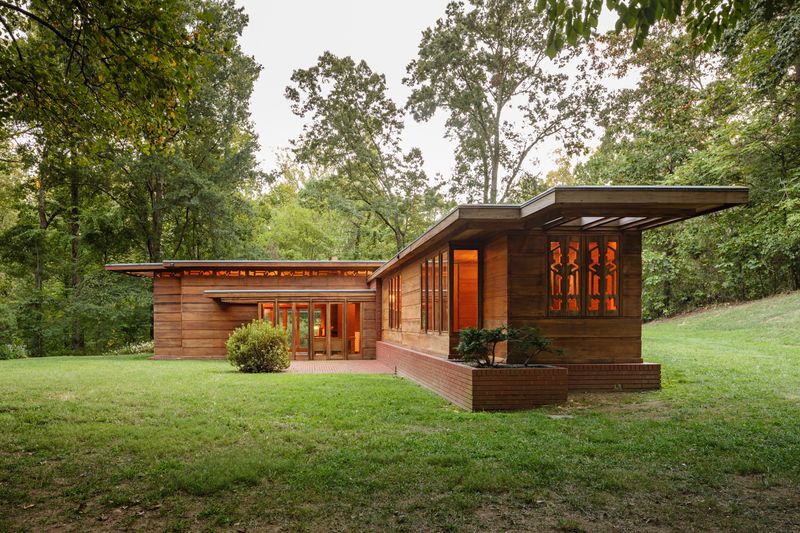
Nestled among Virginia’s trees sits a perfect example of Wright’s democratic Usonian vision. Built in 1940 for a modest-income family, this compact wonder demonstrates how brilliant design doesn’t require enormous budgets.
Natural light floods the interior through clerestory windows while the signature flat roof and cantilevered overhangs create harmony with the surrounding landscape.
2. Florida Southern College Campus – Lakeland, Florida
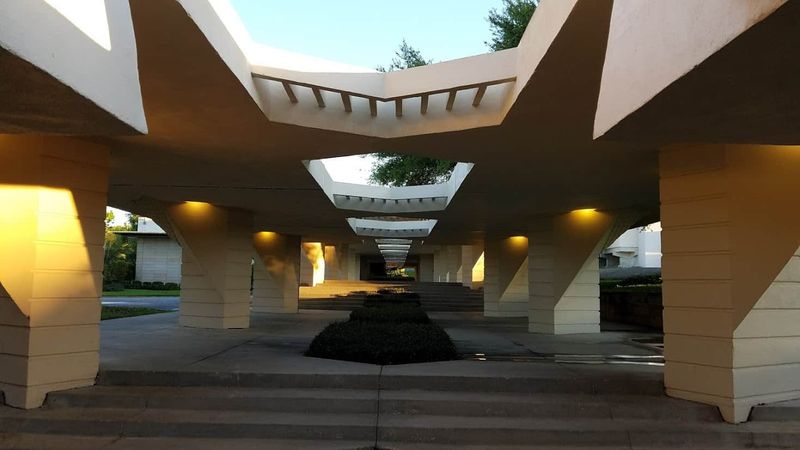
Imagine walking through the world’s largest single-site collection of Wright buildings! Florida Southern College boasts an astonishing 12 structures designed by the master architect between 1938 and 1958.
Students attend classes surrounded by Wright’s signature geometric patterns, covered walkways called “esplanades,” and buildings constructed from his distinctive “textile blocks” that incorporate local materials.
3. Seth Peterson Cottage – Mirror Lake, Wisconsin
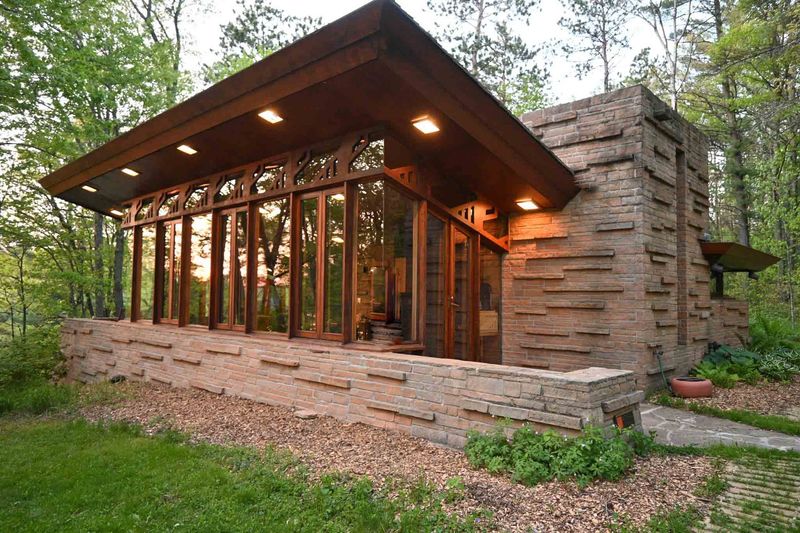
Perched on a wooded bluff overlooking Mirror Lake, this tiny masterpiece packs Wright’s genius into just 880 square feet. Completed posthumously in 1959, the cottage almost faced demolition before preservationists saved it in the 1980s.
Massive stone fireplaces anchor the space while floor-to-ceiling windows dissolve boundaries between inside and out, creating a sensation of living within nature itself.
4. Rosenbaum House – Florence, Alabama
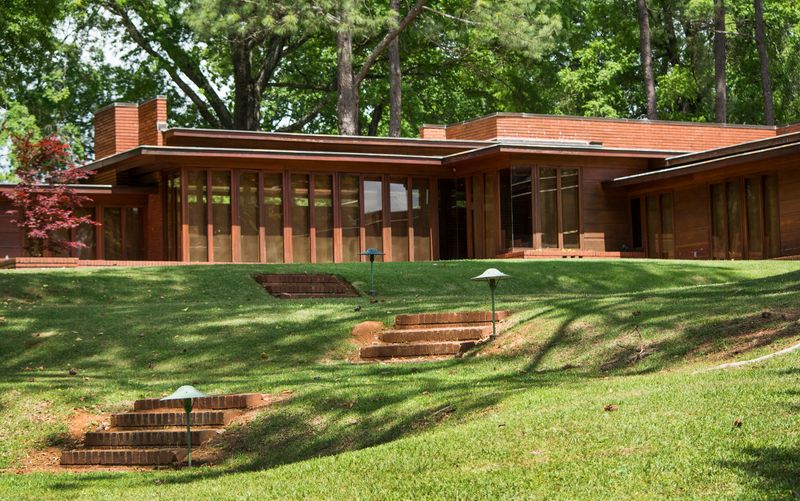
Hidden in Alabama lies one of the most intact examples of Wright’s Usonian homes.
Cypress wood, brick, and glass combine in perfect harmony while built-in furniture maximizes the modest footprint. A 1948 addition seamlessly expanded the home to accommodate the family’s four children without compromising Wright’s vision.
5. Laurent House – Rockford, Illinois
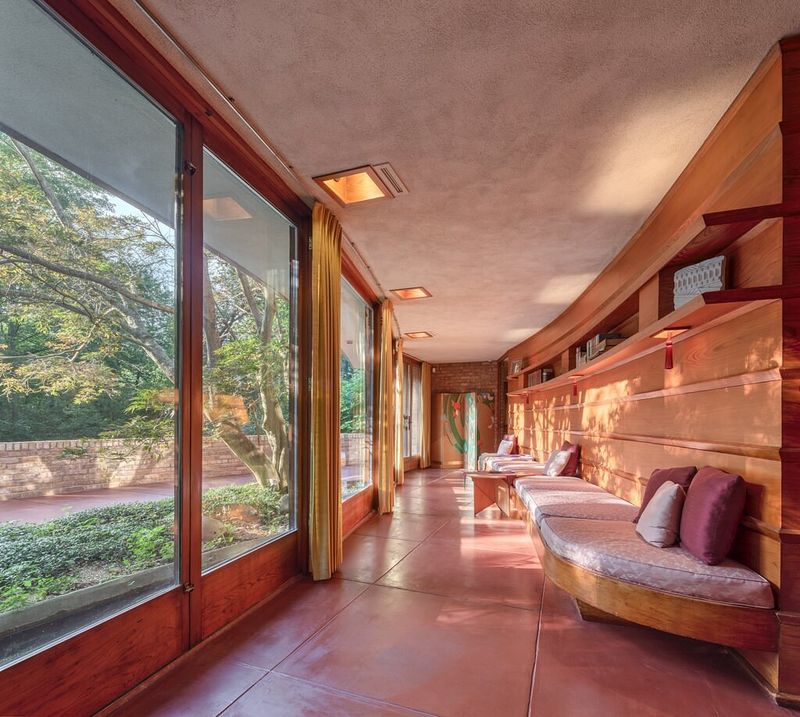
Revolutionary for its time, this 1952 gem stands as Wright’s most accessible creation – literally. Designed for Kenneth Laurent, a wheelchair user and WWII veteran, it features barrier-free architecture decades before accessibility became standard.
Curved walls guide wheelchair movement while lowered windows ensure views of the surrounding landscape remain unobstructed from a seated position. Wright’s compassionate design enabled the Laurents to live independently here for over 60 years.
6. Zimmerman House – Manchester, New Hampshire
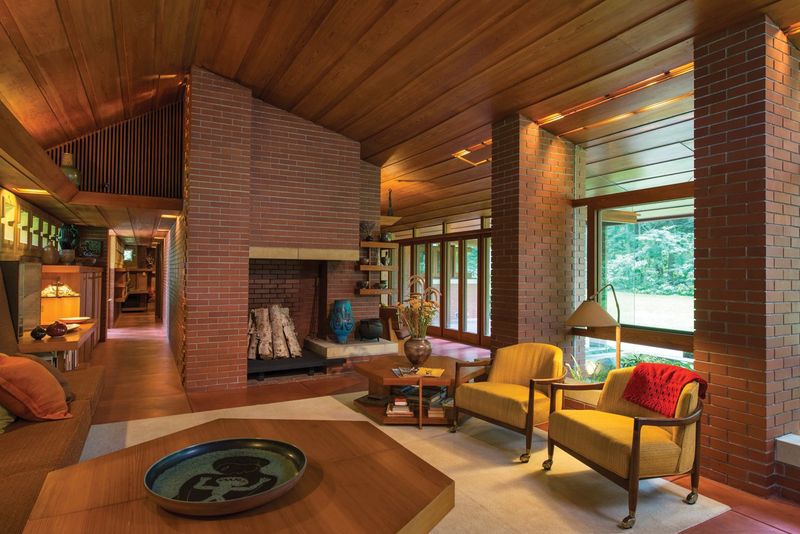
Stepping into this New England treasure feels like entering a musical composition frozen in space. Wright designed absolutely everything here – from the furniture to the mailbox – creating a total work of art.
Rhythm and harmony define the space through repeated geometric patterns in the brickwork, windows, and built-ins. Dr. Zimmerman and his wife Isadore lived here for 36 years without changing a single element, honoring Wright’s complete vision.
7. Usonian House at Crystal Bridges – Bentonville, Arkansas
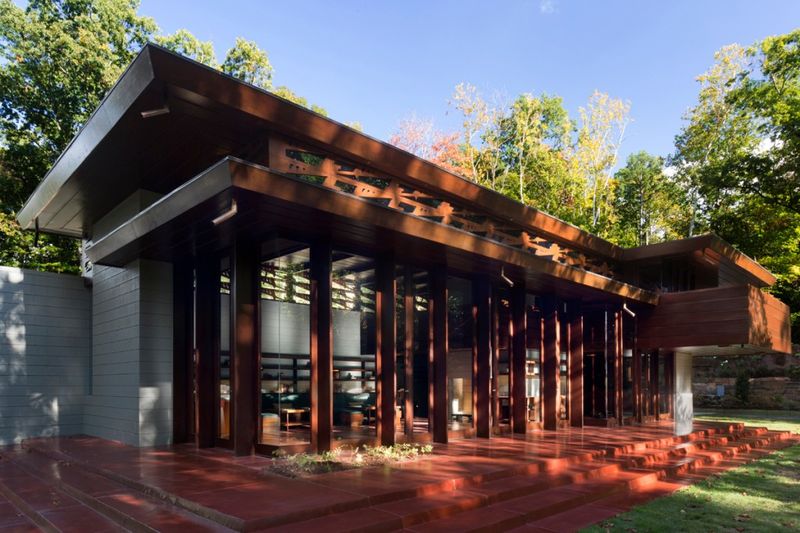
Would you believe this Wright house traveled over 1,200 miles to find its new home? Originally built in New Jersey in 1954 for the Bachman-Wilson family, it was meticulously disassembled, moved, and rebuilt at the Crystal Bridges Museum.
Rising flood waters threatened the original location, prompting this extraordinary preservation effort. Visitors now experience Wright’s genius firsthand as the museum allows public access to this intimate space.
8. Gordon House – Silverton, Oregon
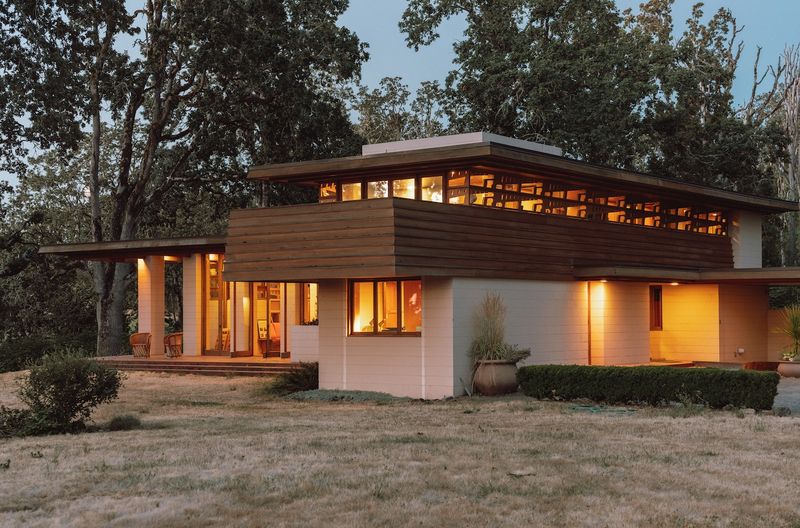
Saved by preservationists with just days to spare before demolition, this Pacific Northwest treasure now stands as Oregon’s only Wright building. Completed in 1964, it was one of the last Usonian designs Wright created before his death.
Constructed entirely from concrete blocks and wood native to the region, the home exemplifies Wright’s belief in using local materials. Geometric cutouts in the concrete walls cast ever-changing patterns of light throughout the interior spaces.
9. Beth Sholom Synagogue – Elkins Park, Pennsylvania
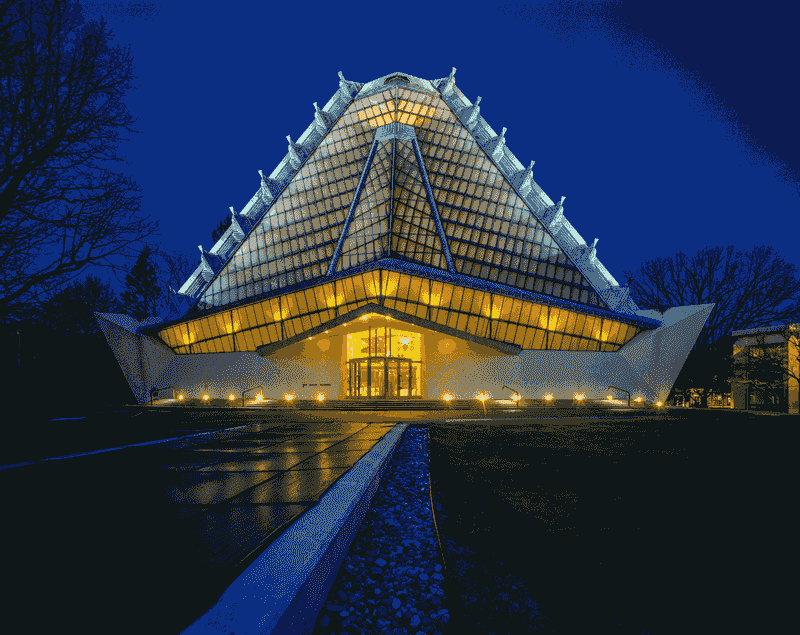
Glowing like a crystal mountain at night, this revolutionary synagogue was Wright’s only Jewish commission. Finished just months after his death in 1959, the building radically reimagines religious architecture.
Wright designed the sanctuary to evoke Mount Sinai, with translucent fiberglass panels forming a pyramidal roof that bathes worshippers in natural light. Rather than imitating traditional European synagogues, he created a distinctly American sacred space that embodies spiritual ascension.
10. Auldbrass Plantation – Yemassee, South Carolina
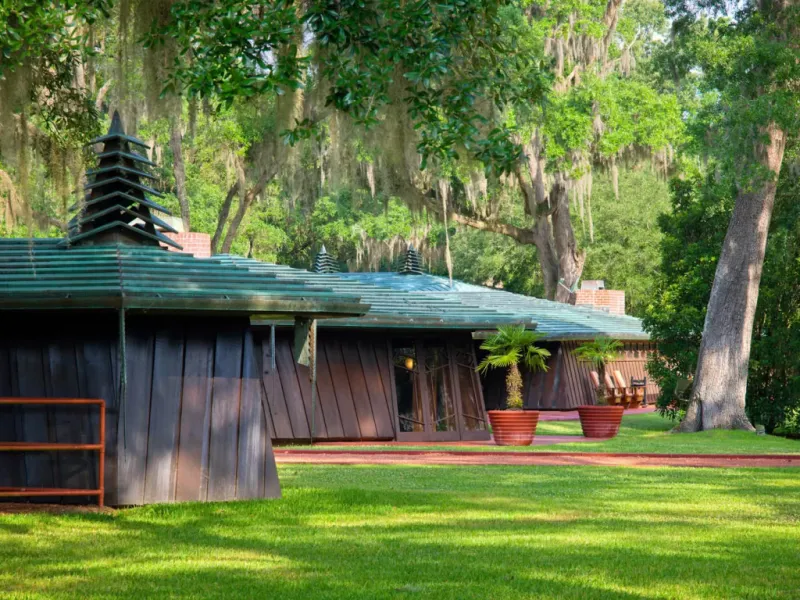
Rescued from ruin by Hollywood producer Joel Silver in 1987, this sprawling Southern estate represents Wright’s largest residential commission. Every element – from the buildings to the cattle pens – leans at a precise 9-degree angle to create dynamic harmony with the landscape.
Wright incorporated local cypress wood and indigenous motifs throughout the property. Cleverly designed copper downspouts resemble Spanish moss, demonstrating his attention to regional context and natural details.
11. Stanley Rosenbaum House – Florence, Alabama
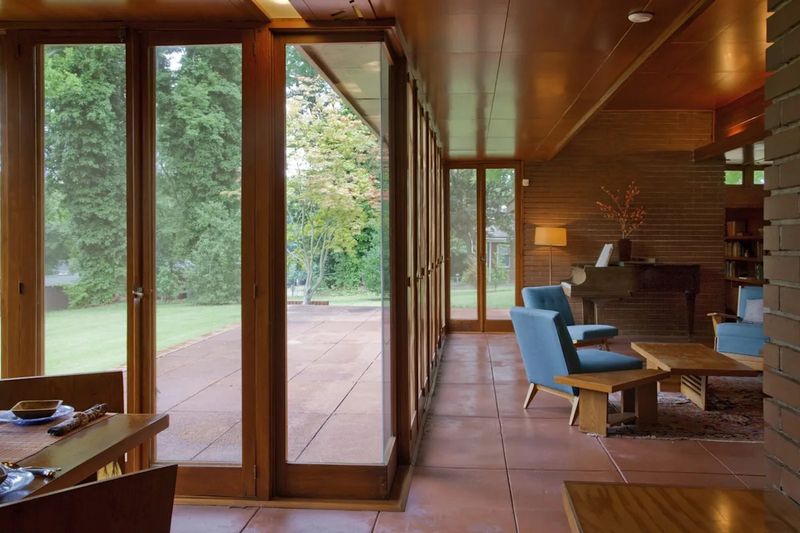
Sunlight dances across this Alabama gem’s interior through Wright’s ingenious clerestory windows and perforated wooden panels.
Merging indoor and outdoor spaces through glass walls and garden views, Wright created what he called a “machine for living.” Original Wright-designed furniture remains throughout the house, offering visitors a complete experience of his holistic design approach.
12. Bachman-Wilson House – relocated to Arkansas
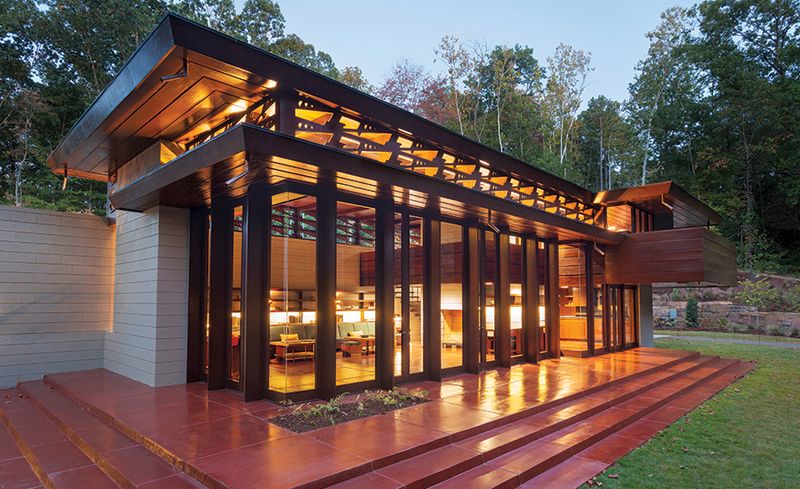
Against all odds, this architectural treasure survived decades of flooding before finding salvation 1,200 miles from its original New Jersey location. Wright designed it in 1954 for Gloria and Abraham Wilson, incorporating his signature Usonian elements with Japanese-inspired touches.
Crystal Bridges Museum meticulously numbered each piece during disassembly, ensuring perfect reconstruction in Arkansas. Mahogany details, clerestory windows, and concrete block construction showcase Wright’s mastery of materials.
13. Westhope – Tulsa, Oklahoma
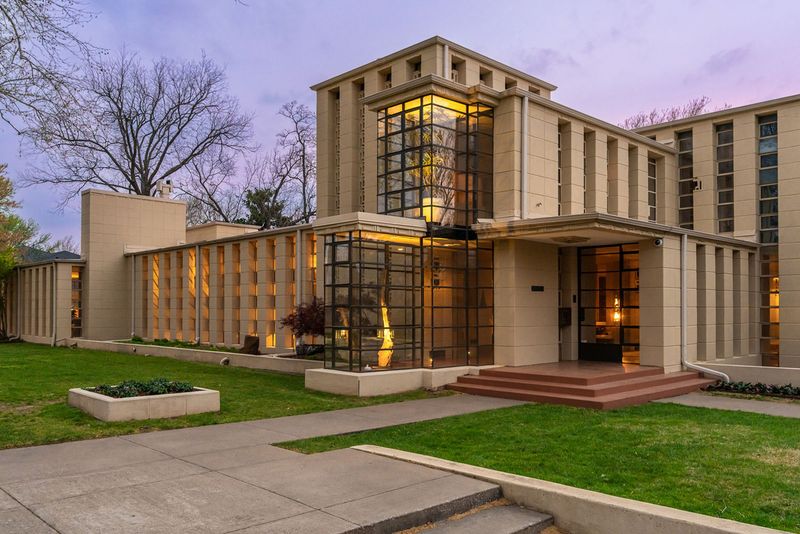
Vertical concrete pillars create a striking rhythm across this 1929 textile-block masterpiece, specially designed for Wright’s cousin Richard Lloyd Jones. Over 200 glass doors and windows flood the interior with Oklahoma sunshine while maintaining privacy through strategic placement.
Wright’s innovative air conditioning system – rare for its time – utilized the home’s water features for cooling. Despite initial leaks that prompted Jones to joke that “this is what happens when you ask a genius to design a house,” Westhope stands as a beloved Tulsa landmark.
14. Graycliff – Derby, New York
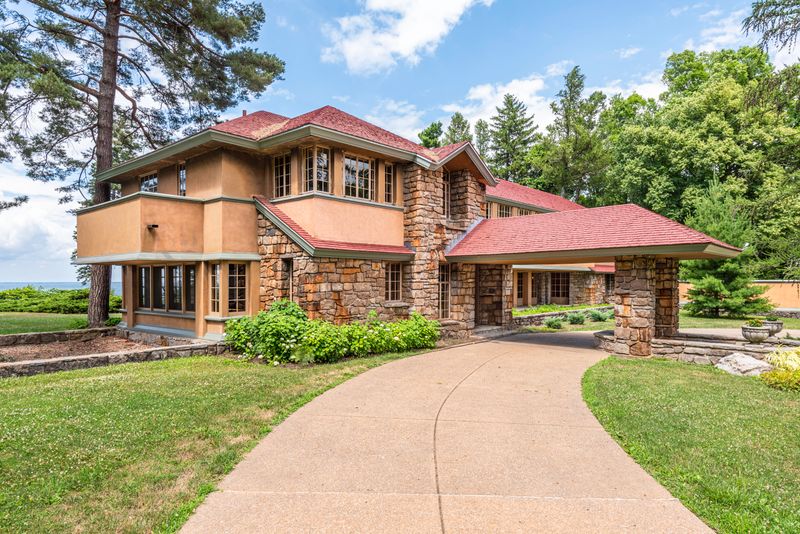
Perched dramatically on a cliff overlooking Lake Erie, this summer retreat was designed for Darwin Martin and his visually impaired wife Isabelle. Light became Wright’s primary material here, with enormous windows and glass doors dissolving boundaries between inside and out.
Nicknamed “The Jewel on the Lake,” Graycliff nearly faced demolition before preservationists intervened in 1997. Wright incorporated local limestone throughout the property, anchoring his modern vision to the ancient geology of the Great Lakes.
15. Annunciation Greek Orthodox Church – Wauwatosa, Wisconsin
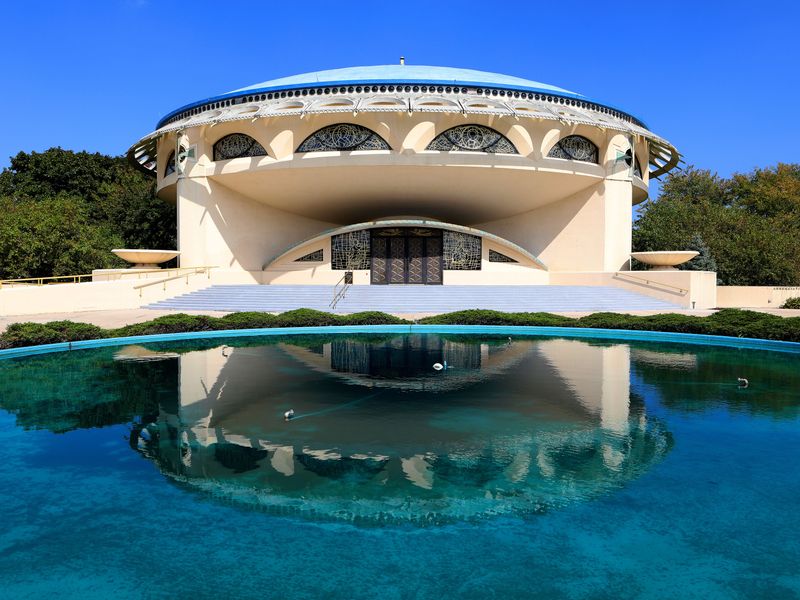
Looking skyward, this circular church crowned with a massive blue dome seems ready for liftoff! Completed after Wright’s death in 1961, the building brilliantly reinterprets Byzantine architectural traditions through his modernist lens.
Wright based the circular design on the Greek cross, creating a unified worship space without columns or visual obstructions. Circular motifs repeat throughout – from the overall footprint to the perforated concrete block details – creating a harmonious sacred geometry.